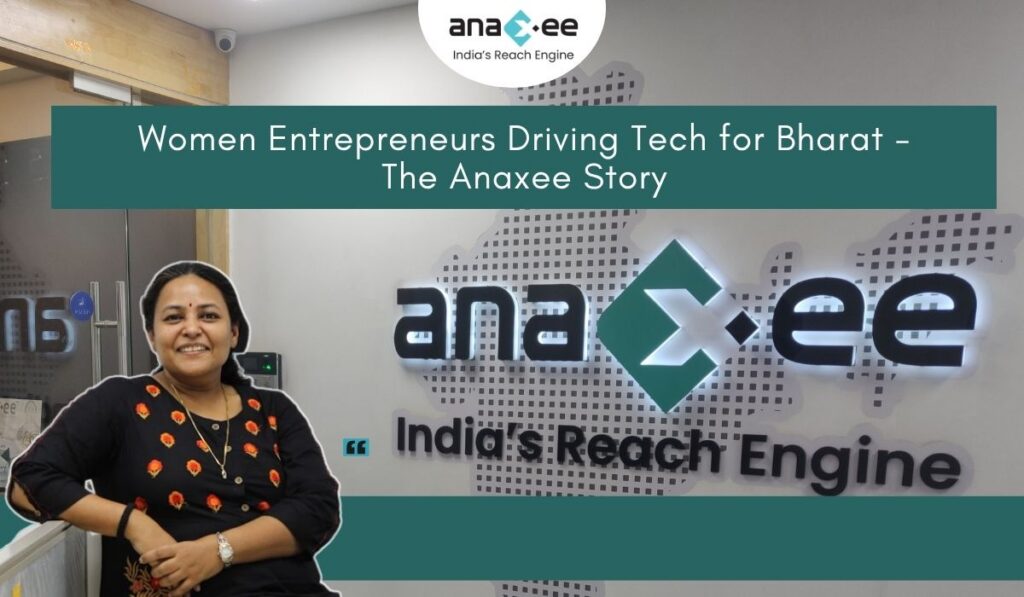

Introduction — Rethinking Where and Who Builds Tech
India’s technology story has often been told through metro success narratives. That framing misses a large part of the country: the small towns and villages where digital services are hardest to deliver. Anaxee Digital Runners emerged to answer that simple operational question: how do you make digital inclusion real at the last mile?
At the heart of that answer is leadership by people who understand rural India — and one of those leaders is Arti Agrawal, co-founder and COO of Anaxee. Arti’s early recognition on platforms like the Women Entrepreneur Quest (WEQ) helped position Anaxee as a women-led, impact-driven technology company. See AnitaB.org’s WEQ coverage for context. (AnitaB.org WEQ 2016 overview: https://ghcindia.anitab.org/news/perspective/weq-2016-top-10-silicon-valley/)
2. The Problem They Chose: Digital Access ≠ Digital Use
Most solutions assume that if you build an app, people will use it. But in many rural contexts, the barriers are different: low digital literacy, limited connectivity, language mismatch, and—critically—lack of local trusted intermediaries.
Rather than chasing feature parity with urban apps, Arti and her co-founder focused on operational realism: equip local youth with simple smartphones and a clear set of tasks, then tie those agents into a technology stack so the urban client can scale fieldwork reliably. The result: a human layer that makes digital services usable.
This operational honesty — designing for constraints first — is what gives Anaxee its edge.
3. WEQ 2016: The Recognition That Mattered
In 2016, Arti Agrawal was selected among the Top 10 winners of the Women Entrepreneur Quest (WEQ) — an initiative that offers an experiential trip to Silicon Valley and mentorship to women technopreneurs. The WEQ recognition was important for two reasons:
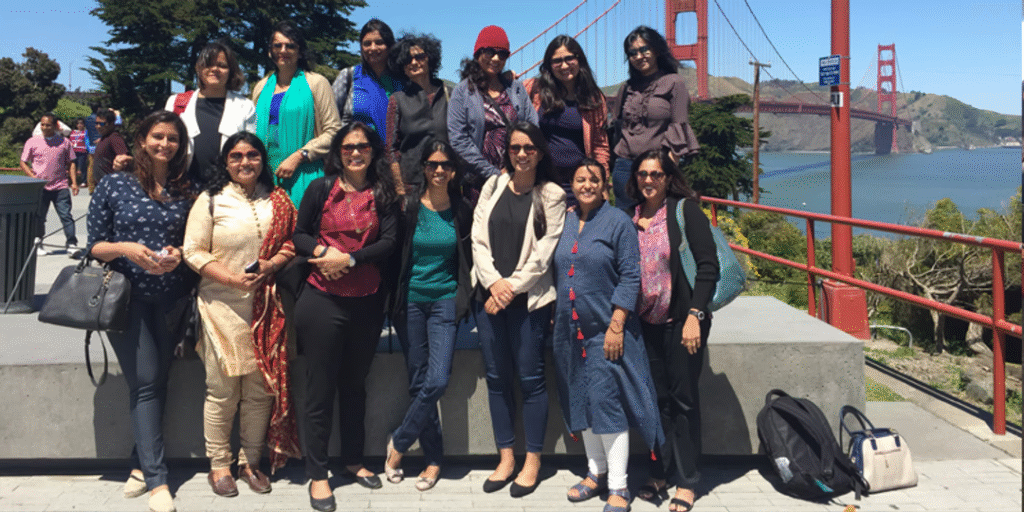
- Validation outside India — it signaled that a model focused on rural operations had global relevance.
- Visibility for women-led, non-metro startups — the spotlight moves investor and mentor attention beyond typical urban playbooks.
AnitaB.org’s coverage of the WEQ and its list of winners highlights the program’s role in amplifying women tech founders; Arti’s inclusion confirmed that Anaxee’s model was both innovative and scalable. (See WEQ winners list and program summary: https://ghcindia.anitab.org/news/perspective/weq-2016-top-10-silicon-valley/)
4. Building from Indore: The Practical Advantages of Being Close to Bharat
Starting a tech company in Indore, rather than a major startup hub, was more than sentimental — it was strategic. Indore’s geography and social context gave Anaxee direct access to the very communities they intended to serve. Arti’s local understanding informed operational choices:
- Recruit runners from the same communities to ensure cultural fit.
- Train on simple, repeatable tasks rather than heavy technical skills.
- Use low-bandwidth, offline-friendly features in the runner app.
- Make payments and incentives transparent to build trust.
This close-to-context approach reduced friction and accelerated learning cycles. It also repositioned Anaxee as a pipeline for rural employment: the runners were not just workers, they were community ambassadors.

5. The Digital Runner Model: Design, Incentives, Accountability
At the core of Anaxee’s operational model is a pragmatic blend of incentives and measurement:
- Simple KPIs for runners — tasks completed, validated outcomes, geo-tagged evidence.
- Per-task payment structures to align livelihood incentives with quality.
- Mobile app supervision for real-time monitoring and fraud reduction.
- Local training modules that stress communication, data integrity, and ethical conduct.
What often fails in field execution is the temptation to overcomplicate. Arti’s leadership favored clarity — make the runner’s role easy to learn, easy to manage, and easy to integrate with partner workflows.
That principle enabled Anaxee to scale: a human workflow mapped cleanly onto a digital dashboard.
6. Recognition Beyond WEQ: GES, Wharton & Media Attention
WEQ opened doors, but Anaxee’s next breakthrough came through broader ecosystem validations: winning a Golden Ticket at Road to GES (Global Entrepreneurship Summit), being a finalist in university startup challenges, and coverage in Indian media outlets that highlighted Anaxee’s unusual combination of tech and fieldforce.
Press attention (e.g., YourStory profiles of women entrepreneurs) helped reframe the narrative: this was not a small civic project, but a replicable operational platform that could serve private, public, and philanthropic clients.
For a deeper read on media narratives about women entrepreneurs in India (and the environment in which Anaxee emerged), see this YourStory feature on women founders. (YourStory coverage: https://yourstory.com/2017/08/indian-women-entrepreneurs-challenges/)
7. Why Gender-Inclusive Field Teams Matter
Anaxee’s focus on including women in its runner network is not tokenistic. In many communities, female runners open access to households and conversations that male runners cannot. This has tangible impact in areas like health outreach, maternal services, and behaviour-change campaigns where privacy and cultural norms matter.
Arti’s operational choices emphasized recruitment of female runners, design of gender-sensitive training, and safe work protocols. That created a multiplier: more credible outreach, better data quality, and higher local buy-in.
8. Translating Recognition into Systems: Process over PR
Awards and summit invitations are useful for visibility—but they don’t guarantee scale. Arti’s practical approach was to convert recognition into systems: standard operating procedures, training curricula, client onboarding templates, legal frameworks for local work, and tech features that enforced data quality.
This is a critical distinction many mission startups miss: scale is a systems problem, not a PR problem. Anaxee’s durability stems from continuous refinement of systems, not publicity wins.
9. From Social Pilots to Commercial Viability
Anaxee’s value proposition is that it is simultaneously a delivery partner for CSR and a commercial execution engine for enterprise customers. That hybrid model matters because:
- It diversifies revenue streams.
- It keeps the field workforce employed across project cycles.
- It proves the model under commercial pressure, which strengthens discipline.
Under Arti’s management, Anaxee resisted a common trap — making social impact an afterthought to commercial scale. Instead, impact metrics were embedded in commercial contracts, which built accountability and sustainability.
10. Case Example: How Runner Networks Enabled Health Campaigns
Project Swaraksha (Anaxee’s vaccination outreach) is a high-visibility example of the runner model in action. While this post focuses on non-Swaraksha coverage, it’s useful to note how the same operational scaffolding — trained runners, clear incentives, app monitoring — supported a large national health campaign with measurable results.
Project learnings that are relevant across domains: local language messaging, household-level counseling, assisted digital registration, and verification via geo-tagged evidence.
These are precisely the dependable execution pieces funders and corporates need when they commission last-mile programs.
11. The Power of Local Trust as a Business Asset
Anaxee’s business insight is simple and often overlooked: trust is a scalable asset when embedded in local agents. Trust reduces friction, increases compliance, and improves data reliability — all of which reduce cost and risk for clients.
Arti’s operational discipline on transparency, timely payments, and community respect converted trust into measurable outcomes. Investors and partners who focus only on technology miss the risk: technology without trusted agents rarely translates to real behaviour change.
12. Lessons for Women Founders and Impact Entrepreneurs
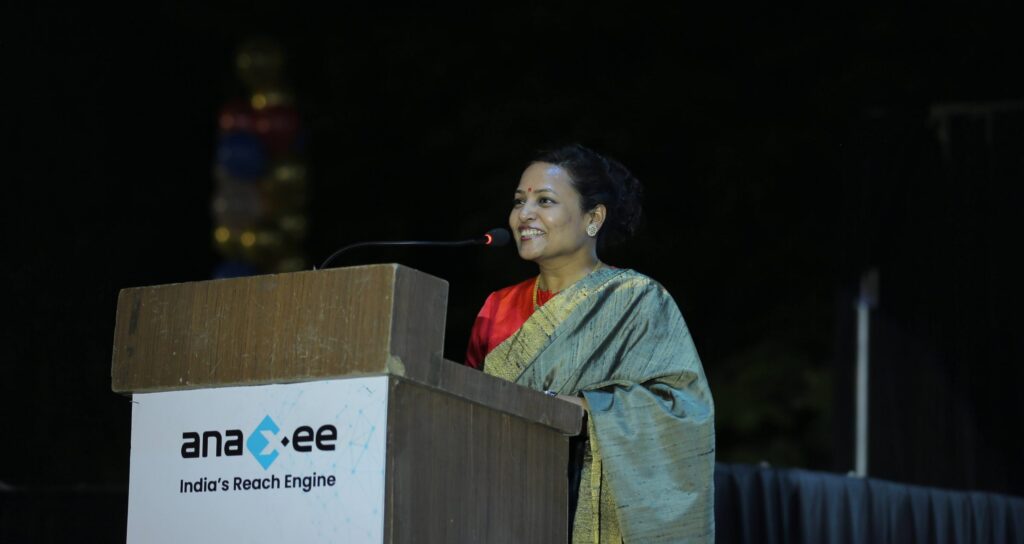
Arti Agrawal’s trajectory offers practical lessons:
- Design for constraints first — build solutions that work under low bandwidth, low literacy, and low trust.
- Measure what matters — outputs are useful; outcomes are necessary. Embed outcome metrics in contracts.
- Structure incentives — align local livelihoods with project goals.
- Invest in training and governance — process matters more than charisma.
- Use recognition strategically — convert awards into partnerships and systems, not headlines.
This is not a manifesto — it’s a playbook. It emphasizes operational rigor over optics, which is precisely what scales impact.
13. Where the Model Scales Next: Climate, Carbon, and Beyond
The same human + tech architecture that delivered digital inclusion can be repurposed for climate action:
- Agroforestry and tree census — runners gather baseline biometric data for carbon projects.
- Community engagement for NbS (Nature-based Solutions) — local agents educate and enroll landholders.
- MRV (Monitoring, Reporting & Verification) — geo-enabled evidence collection satisfies auditors and registries.
Arti’s emphasis on training and ethical fieldwork makes such repurposing credible. Tech for climate requires rigor in both data and community consent — and that is exactly Anaxee’s competence.
14. The Ongoing Challenge: Maintaining Quality at Scale
Scaling human networks carries known risks: quality drift, fraud, attrition, and compliance lapses. Arti’s approach to these challenges has three pillars:
- Layered verification — multi-step validation for critical datapoints.
- Continuous training — short, frequent refresher modules delivered via the app.
- Incentive design — payments tied to validated outcomes with holdbacks for audit.
These are operational levers, not platitudes. They reduce risk and sustain client confidence.
15. Conclusion — Leadership That Chooses Execution Over Narrative
Arti Agrawal’s role in Anaxee’s story is a corrective to a wider narrative: that women founders are primarily symbolic leaders. She demonstrates instead that women can — and do — build operational systems that deliver scale and accountability.
AnitaB.org’s WEQ recognition was an early accelerator for Arti’s leadership, but the scale that matters came from process building, rigorous training, and relentless attention to local realities.
If your organisation needs last-mile delivery of digital services, trusted community engagement, or scalable MRV for climate programs, Anaxee’s model offers a tested option — built from the ground up, guided by people who understand the ground.