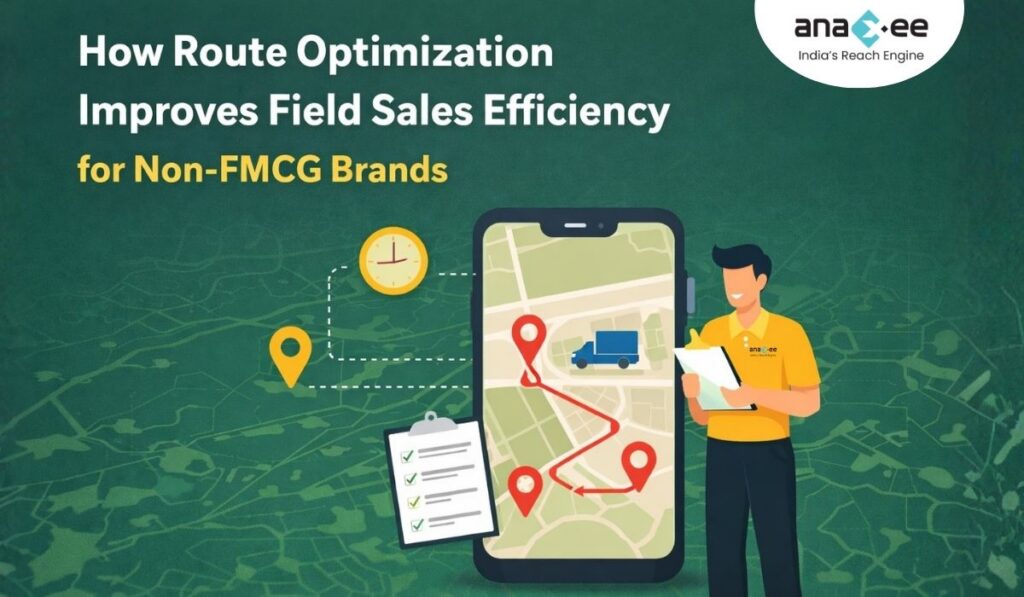

Field sales is still the backbone of growth for most non-FMCG brands.
Whether it’s agri-inputs, industrial equipment, construction materials, energy solutions, or B2B services, growth depends on how well your teams cover the market on the ground.
Yet, despite investments in sales teams and distributors, many non-FMCG brands struggle with one silent problem:
Their field routes are inefficient.
Sales reps travel long distances, miss priority outlets, spend time revisiting low-value locations, and still end the day unsure whether they covered the right market.
This is where route optimization becomes a critical lever — not just for cost control, but for real sales efficiency.
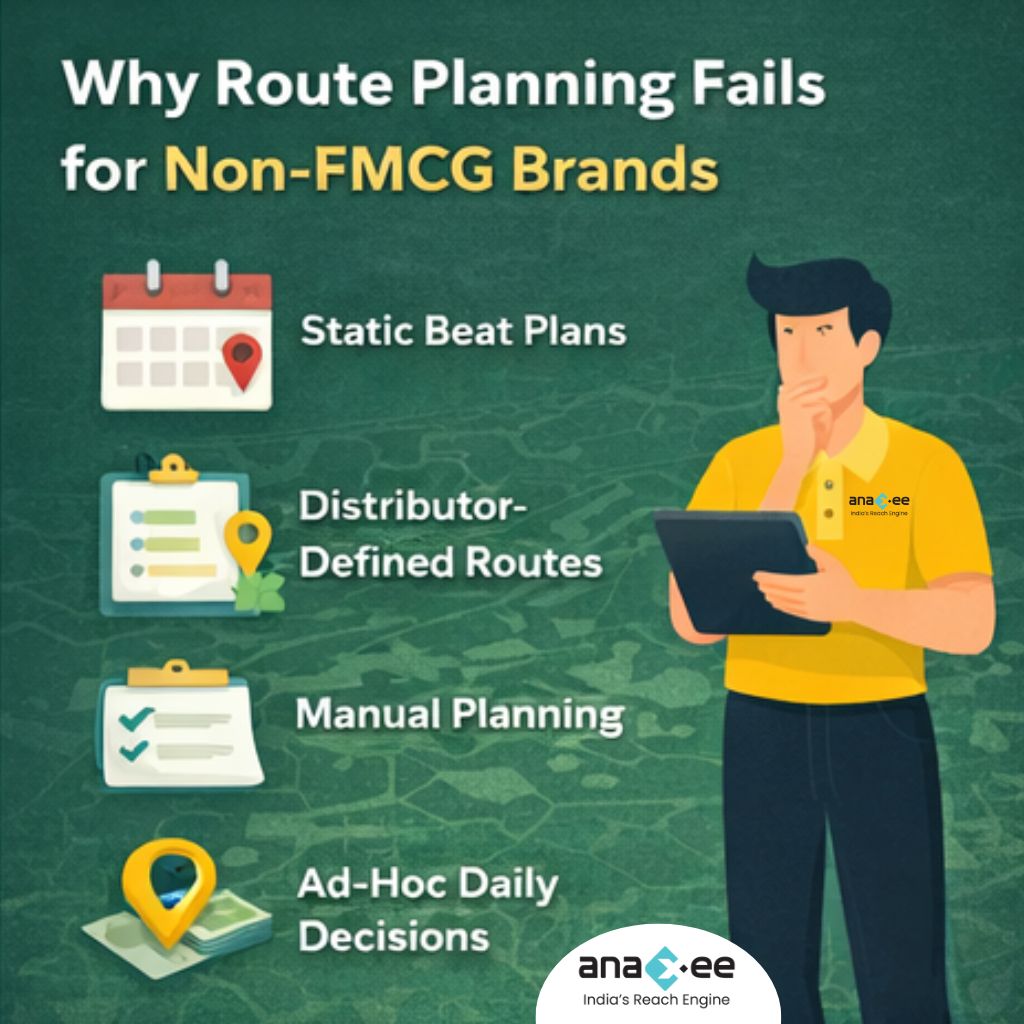
Why Route Planning Fails for Non-FMCG Brands
Unlike FMCG, non-FMCG sales cycles are slower, relationship-driven, and location-specific.
A visit to the right distributor or dealer can influence weeks or months of business.
Yet most brands still rely on:
- Static beat plans
- Distributor-defined routes
- Manual planning based on experience
- Ad-hoc daily decisions by sales reps
These approaches create common problems:
- Too much time spent travelling
- Priority outlets missed
- Uneven market coverage
- No visibility into daily execution
- Difficulty scaling field teams
The result is not just inefficiency — it’s lost opportunity.
What Route Optimization Really Means in Field Sales
Route optimization is often misunderstood as “shortest path navigation.”
In reality, for non-FMCG brands, it is about decision-driven planning, not just distance.
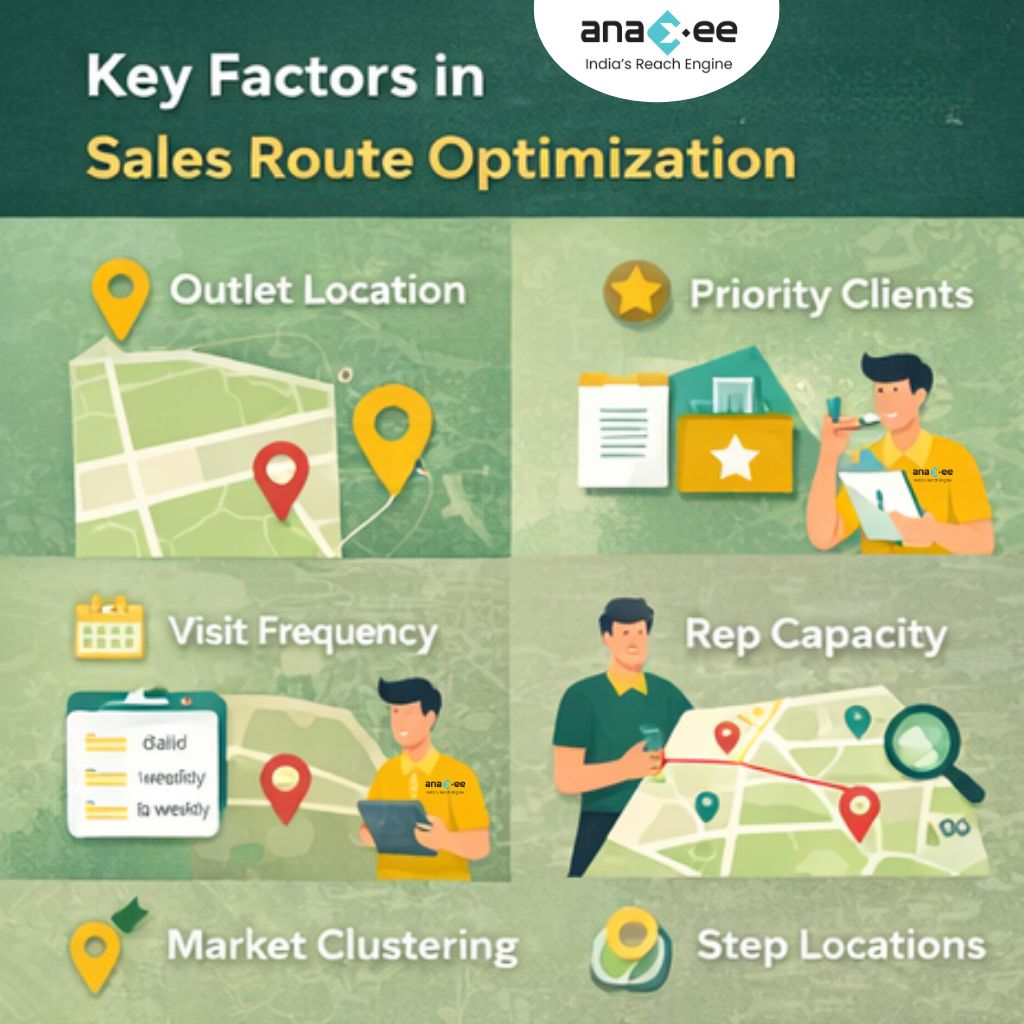
Effective route optimization considers:
- Location of distributors, dealers, and service points
- Priority of outlets based on business value
- Visit frequency requirements
- Realistic daily capacity of sales reps
- Geographic clustering of markets
The goal is simple:
Help field teams meet the right customers, in the right sequence, with minimum waste of time and effort.
Why Route Optimization Matters More for Non-FMCG Brands
Non-FMCG field sales is expensive.
Each visit carries higher stakes than FMCG retail execution.
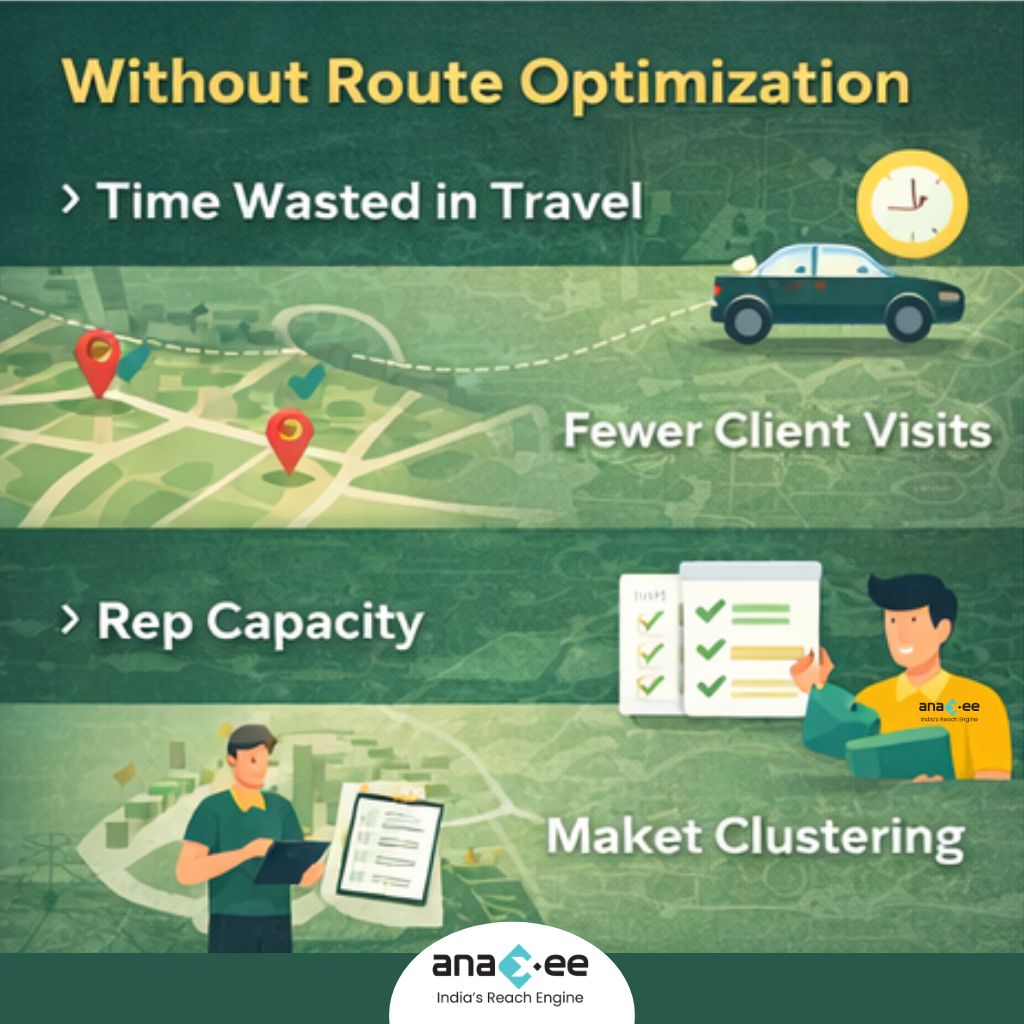
Without optimized routes:
- High-potential outlets remain under-served
- Low-value visits consume disproportionate time
- New markets are explored slowly
- Sales teams burn out due to inefficient travel
With optimized routes:
- Sales reps complete more meaningful visits per day
- Coverage improves without increasing headcount
- Follow-ups become structured
- Market expansion becomes predictable
In short, route optimization turns movement into momentum.
The Anaxee Approach to Route Optimization
Anaxee does not position route optimization as a standalone feature.
It is part of a field execution ecosystem designed for real-world markets.
Anaxee’s strength lies in two core assets:
- Technology built for field execution
- A nationwide network of 50,000+ Digital Runners
Together, they help non-FMCG brands plan, execute, and monitor field routes with clarity.
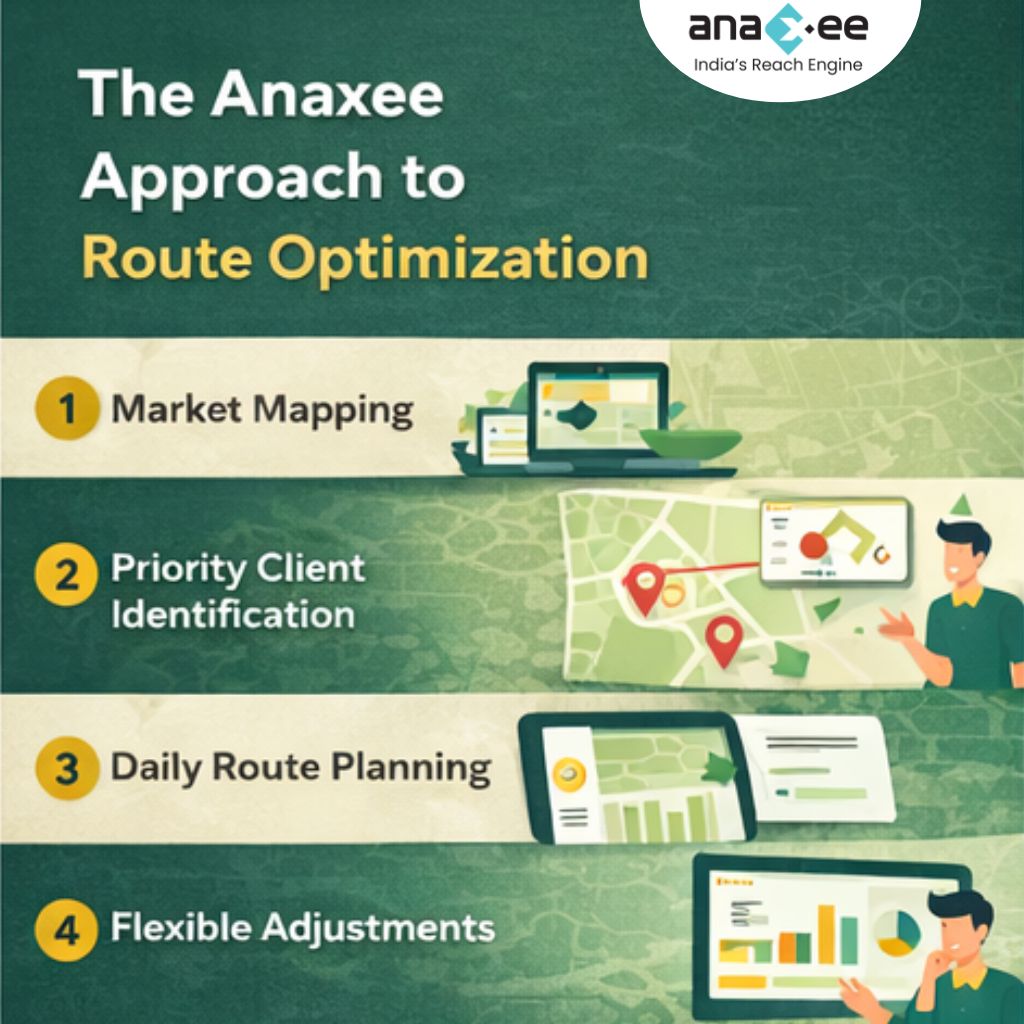
1. Building Routes on Real Market Data
Route optimization only works when routes are based on accurate market mapping.
Anaxee supports brands by:
- Mapping distributors, dealers, retailers
- Structuring outlet lists with location intelligence
- Eliminating blind spots created by partial distributor data
When routes are built on verified market presence, sales teams stop guessing and start executing.
2. Prioritization-Driven Route Planning
Not all outlets deserve the same frequency or effort.
Anaxee enables brands to:
- Identify high-priority outlets
- Define visit frequency based on business logic
- Avoid repetitive low-impact visits
This ensures that routes are business-aligned, not just geographically convenient.
3. Tech-Enabled Daily Route Guidance
Once routes are defined, Anaxee’s field-ready technology:
- Shares daily visit plans with field teams
- Organizes routes in logical sequences
- Helps reps stay focused on planned execution
Sales reps start their day with clarity — knowing where to go, why it matters, and what outcomes are expected.
4. Flexibility for Real-World Conditions
Field conditions are never perfect.
Distributors may be unavailable.
Travel delays happen.
Priorities change.
Anaxee’s workflows allow:
- Adjustments without losing structure
- Continuity in route execution
- Visibility into deviations from plan
This keeps the system practical, not rigid.
5. Execution Visibility for Sales Leaders
One of the biggest challenges for non-FMCG leadership is lack of visibility.
Anaxee helps bridge this gap by providing:
- Visibility into planned vs actual visits
- Route adherence insights
- Coverage tracking across regions
This enables sales leaders to:
- Identify inefficiencies early
- Support underperforming regions
- Improve planning with real execution data
The Business Impact of Route Optimization
When route optimization is implemented correctly, brands experience tangible benefits:
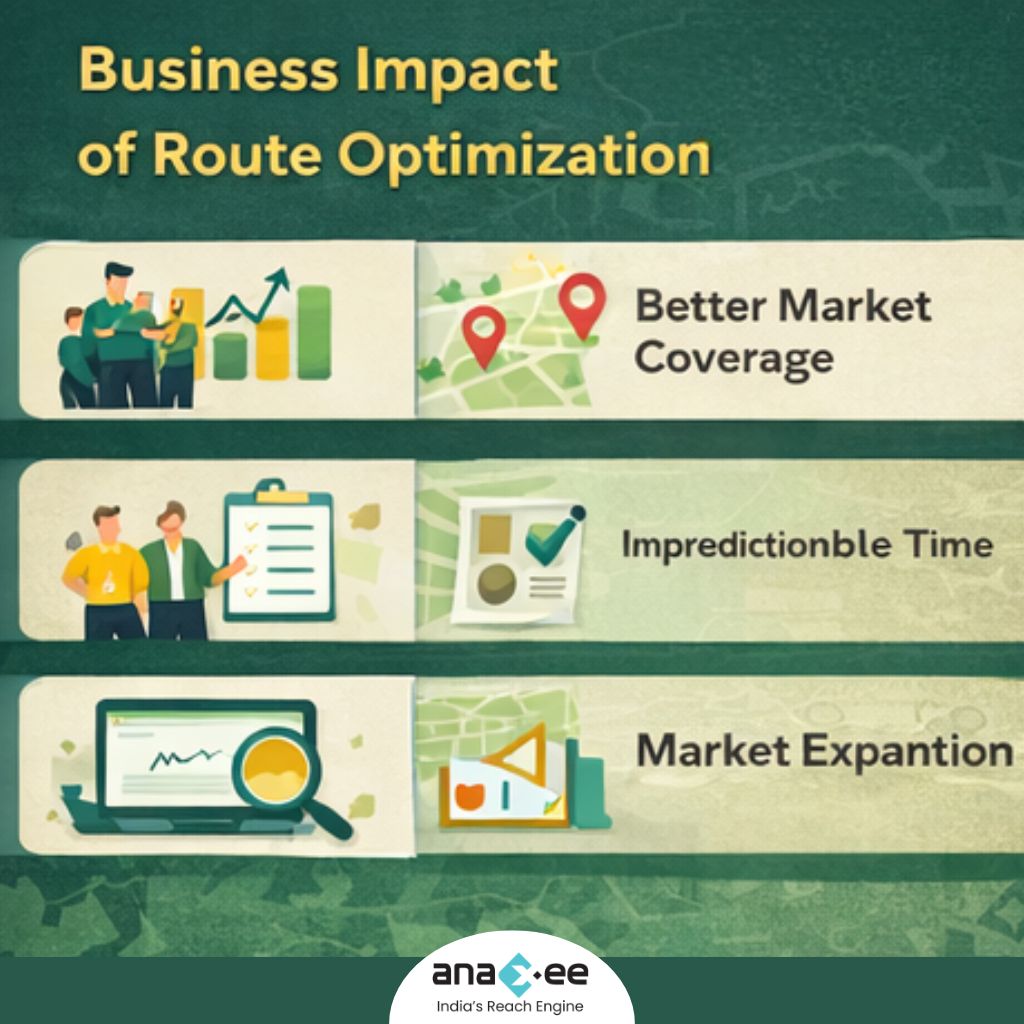
Higher Field Productivity
More visits completed without increasing travel time.
Better Market Coverage
Reduced gaps in distributor and dealer reach.
Lower Operational Waste
Less fuel, less idle time, fewer redundant visits.
Stronger Distributor Relationships
Consistent and predictable engagement.
Scalable Growth
New regions can be added without chaos.
Why Technology Alone Is Not Enough
Many brands try route optimization through generic software tools.
The problem?
- Tools don’t understand ground realities
- Data is outdated or incomplete
- Field adoption remains low
Anaxee bridges this gap by combining technology with field execution support through its Digital Runner network.
This ensures:
- Data stays current
- Execution stays aligned
- Routes stay relevant
Who Benefits Most from Route Optimization with Anaxee
Anaxee’s approach is especially effective for:
- Agri-input brands, Agri-tech brands
- Industrial and B2B manufacturers
- Equipment and machinery companies
- Electronic Products, Home Appliances
- Automobile Accessories, Batteries, Tyres, Lubricants
- Energy and infrastructure services
- Non-FMCG brands expanding into new geographies
Any brand where field sales drives revenue benefits from structured route execution.
Route Optimization Is No Longer Optional
As markets become more competitive, relying on instinct and experience alone is risky.
Field sales efficiency today depends on:
- Better planning
- Better execution
- Better visibility
Route optimization is not about controlling sales reps —
it’s about enabling them to perform better.
How Anaxee Creates Long-Term Value
Anaxee’s value lies in its execution mindset:
- Ground-first thinking
- Data that reflects reality
- Systems built for scale
By enabling smarter routes, Anaxee helps non-FMCG brands:
- Grow without inefficiency
- Expand without losing control
- Build sales systems that last
Conclusion
For non-FMCG brands, growth does not come from more travel —
it comes from better movement.
Route optimization, when implemented with the right mix of technology and on-ground execution, transforms field sales from a cost center into a growth engine.
That’s where Anaxee fits in.
Want to see how route optimization can improve your field sales efficiency?
Explore how Anaxee enables smarter field execution for non-FMCG brands at anaxee.com.