
Marketing tractors in rural India is not about clever taglines or glossy campaigns.
It is about trust. Presence. Timing. And showing up where decisions are actually made.
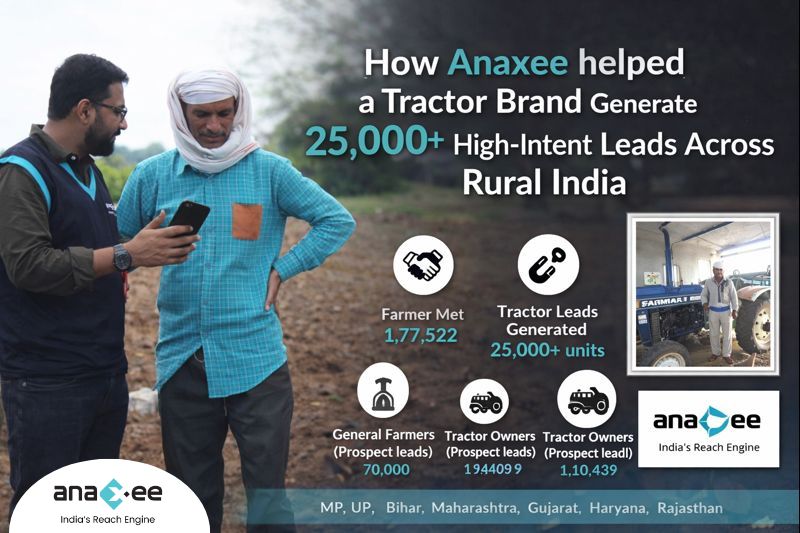
This is a story of how a leading tractor brand worked with Anaxee to generate 25,000+ qualified tractor leads across MP, UP, Bihar, Maharashtra, Gujarat, Haryana, and Rajasthan — not through shortcuts, but through disciplined, on-ground execution.
This is not a fairy-tale growth story.
It’s a practical one.
The Real Challenge: Rural Reach Is Not a Media Problem
At first glance, the problem looked familiar.
- Sales growth was plateauing in key rural belts
- Dealer networks existed, but visibility was uneven
- Marketing teams were investing in ATL, digital, and dealer schemes
- Yet walk-ins were inconsistent, and lead quality was unpredictable
The brand didn’t lack awareness.
What it lacked was ground-level conversion intelligence.
Because tractor buying decisions don’t happen online.
They happen:
- At mandis
- During harvesting seasons
- Through peer conversations
- Via mechanics, local dealers, and fellow farmers
No dashboard shows you that.
Why Traditional Campaigns Were Falling Short
Before Anaxee entered the picture, most outreach followed a familiar pattern:
- Centralised campaign planning
- Dealer-led execution
- Event-based activations
- Short-term push during peak seasons
The gaps were obvious once we stepped on the ground:
- Dealers were overburdened
Sales teams were expected to sell and market. - Campaigns were uniform, markets were not
Bihar ≠ Maharashtra ≠ Rajasthan. - No feedback loop from villages
Nobody knew why some villages converted and others didn’t. - Leads existed, but intent was unclear
Many contacts, few serious buyers.
The brand didn’t need more noise.
It needed structured rural presence.
The Shift: From Campaigns to Continuous Presence
Anaxee’s approach was deliberately unglamorous.
Instead of “launching a campaign,” we focused on building a repeatable rural system.
The core belief was simple:
If you meet the right farmer, at the right time, with the right context — leads will follow.
What Anaxee Actually Did on the Ground
1. Village-Level Outreach at Scale
Over the course of the engagement:
- 1,77,000+ farmers were met in person
- Coverage spanned 8,000+ villages
- Operations ran across 225 districts in 7 states
This wasn’t random sampling.
Villages were selected based on:
- Crop patterns
- Tractor density
- Replacement cycles
- Irrigation access
- Existing brand penetration
Every village had a reason.
2. Two Clear Lead Buckets (No Confusion)
Instead of vague “farmer data,” we separated leads into:
- Tractor Owners – upgrade / replacement prospects
- General Farmers – first-time or future buyers
This distinction mattered because:
- Messaging was different
- Follow-ups were different
- Dealer prioritisation became easier
Result:
- 1,10,000+ tractor owner prospects identified
- 70,000+ general farmer prospects mapped
This is where lead quality started improving.
3. High-Intent Lead Identification (Not Just Numbers)
Out of all interactions, Anaxee generated:
👉 25,000+ tractor leads with clear buying signals
These were not:
- “Interested, call later” leads
- Or contacts collected under pressure
These were farmers who had:
- Landholding clarity
- Usage requirement
- Purchase timelines
- Financing intent
Dealers didn’t have to guess anymore.
Why This Worked When Others Didn’t
Let’s be honest.
Meeting farmers is not new.
What changed was how systematically it was done.
Key Differentiators That Actually Mattered
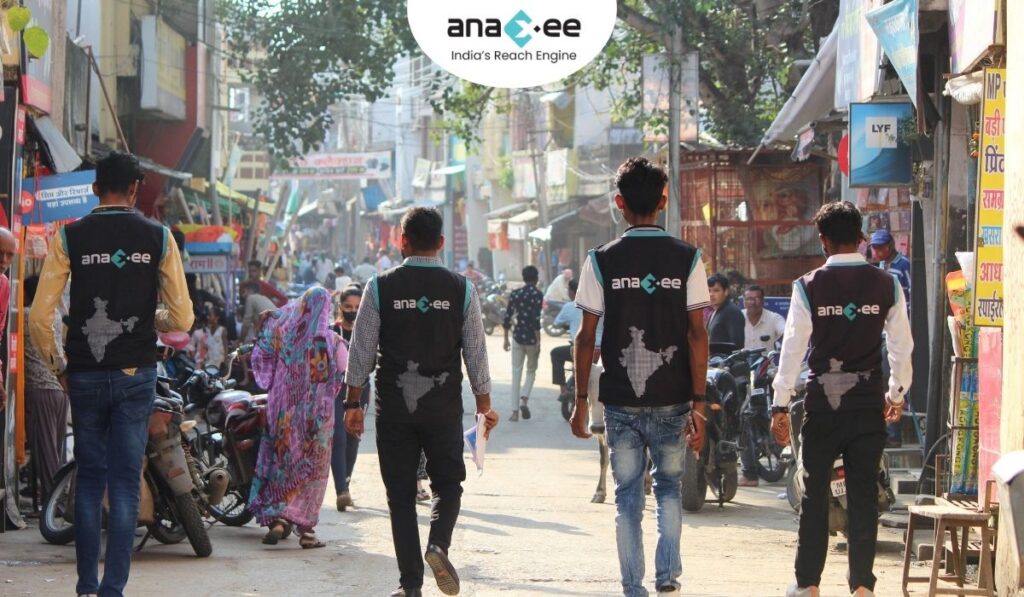
1. Local Runners, Not Outsiders
Anaxee deployed local Digital Runners who:
- Spoke the local language
- Understood farming cycles
- Knew social dynamics
Trust was built faster because conversations felt familiar, not transactional.
2. Daily Verification, Not End-of-Campaign Reports
Every interaction was:
- Logged
- Verified
- Time-stamped
- Location-mapped
Bad data didn’t survive beyond a day.
This reduced:
- Fake leads
- Dealer complaints
- Internal friction
3. Dealer Alignment Was Built In
Instead of bypassing dealers, Anaxee:
- Shared village-wise insights
- Highlighted hot pockets
- Helped prioritise follow-ups
Dealers stopped seeing marketing as “head office pressure”
and started seeing it as sales support.
State-Wise Execution: Same Framework, Different Realities
The framework was consistent.
Execution was not.
MP & UP
- Strong replacement demand
- Diesel efficiency and resale value mattered
- Peer validation played a major role
Bihar
- First-time buyers dominated
- Financing conversations were critical
- Trust outweighed specifications
Maharashtra & Gujarat
- Commercial usage cases emerged
- ROI and durability were key
- Faster decision cycles
Haryana & Rajasthan
- Mechanisation maturity was high
- Upgrade conversations were sharper
- Farmers compared aggressively
This nuance does not come from presentations.
It comes from standing in fields and yards.
What Changed for the Brand
By the end of the program, the brand had:
- A live rural prospect base, not static Excel sheets
- Visibility into which villages actually convert
- Clear signals on where to deploy dealer effort
- Reduced dependence on guesswork
And most importantly:
Marketing stopped being an expense and started behaving like a sales asset.
A Hard Truth: This Is Not a Shortcut Model
This kind of outcome doesn’t come from:
- One-time activations
- Influencer videos
- Festival schemes alone
It comes from:
- Repeated rural presence
- Discipline in data
- Respect for local realities
Anaxee didn’t “run a campaign.”
It built a rural marketing engine.
Why This Matters for Tractor Brands Today
The tractor market is getting tighter.
- Farmers are more informed
- Competition is aggressive
- Margins are under pressure
In this environment:
- Visibility without intent is useless
- Leads without context waste dealer time
- Scale without structure collapses
Ground-truth marketing is no longer optional.
It’s a survival requirement.
Closing Thought
This story isn’t about one brand.
It’s about a shift in how rural marketing needs to be done:
- From episodic to continuous
- From top-down to ground-up
- From vanity metrics to sales reality
If you want rural growth,
you don’t need louder marketing.
You need better presence.
Want to see if this approach can work for your brand?
If your tractor or agri-equipment business is struggling with lead quality, uneven dealer performance, or poor rural visibility, let’s have a practical conversation.
📩 Write to us at: sales@anaxee.com
Tell us your region, product category, and growth challenge—we’ll respond with real options, not pitch decks.