
In the race to scale carbon removal at pace and credibility, one question is rapidly coming into focus: Is technology being used to genuinely solve the core problems of carbon markets — or just to dress up existing processes? The answer matters because the long-term viability of carbon removal — not just its momentary hype — depends on systems that produce trustworthy, auditable, and context-aware outcomes.
At Anaxee, our view is straightforward: technology must be purpose-built for the messy realities of last-mile climate action — particularly for nature-based solutions (NbS) and community-connected projects. Too much of the conversation about digital transformation in carbon markets still centres on generic buzzwords, flashy algorithms, or high-level efficiency promises. What the market actually needs is a trusted ground truth that can survive scrutiny, regulatory rigour, and real-world complexity — and that’s what we have engineered with our digital Monitoring, Reporting & Verification (dMRV) infrastructure.
In this blog, we’ll unpack how technology should transform carbon removal markets, where it currently falls short, and how Anaxee’s approach responds to these gaps in a way that supports high-integrity, scalable carbon removal.
The Technology Myth vs Market Reality
The narrative around technology in carbon markets often defaults to two unhelpful extremes:
- Overhyped innovation rhetoric, where “AI,” “blockchain,” or “machine learning” are invoked as solutions without a clear articulation of what problem they solve.
- Incremental digitization, where traditional MRV processes are simply uploaded into a digital interface without fixing systemic weaknesses.
Both miss the core point: carbon removal markets succeed only if data is trustworthy, auditable, and actionable. This is especially true for nature-based and community-oriented projects where verification isn’t just a desktop exercise — it must reflect complex on-ground realities.
The failure modes here are important: traditional MRV systems collapse when faced with fragmented geographies, intermittent connectivity, human behavioural variation, and equipment limitations at the edge. Technology that depends on ideal conditions ends up creating the illusion of rigor, not real rigor — and that illusion dissolves under independent audit or market scrutiny.
What Purpose-Built Technology Actually Looks Like
Purpose-built technology in carbon removal markets must satisfy three non-negotiable criteria:
- Reality-aware data collection, not ideal world assumptions
- Methodology-aligned execution flows
- Trustworthy, auditable lineage
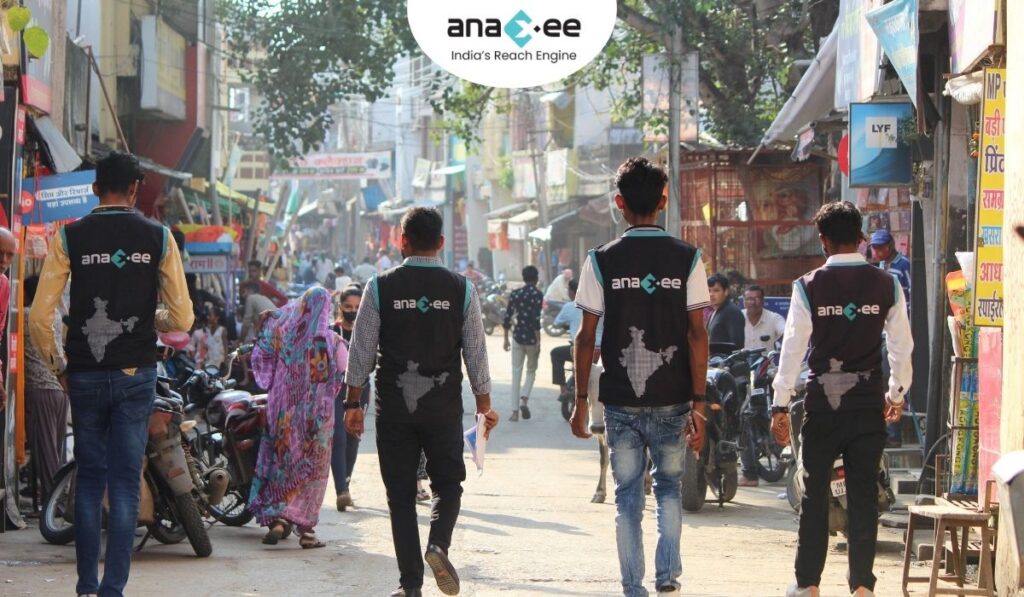
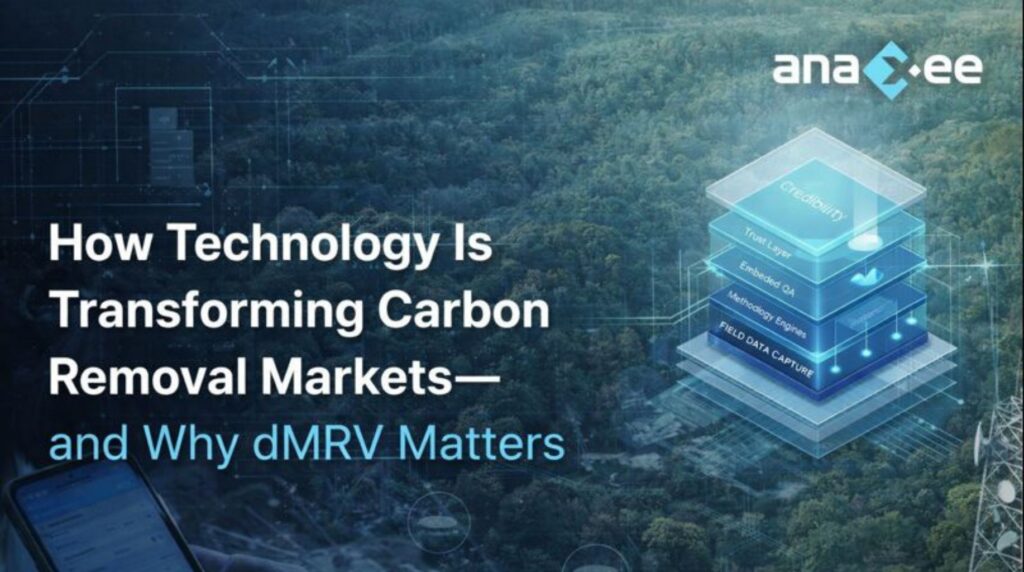
At Anaxee, this means designing our digital MRV system not as a dashboard layer, but as an end-to-end execution architecture that connects human execution, field constraints, and methodology requirements into a cohesive whole.
1. Reality-Aware Data Capture at the Edge
The first principle is this: don’t assume perfect connectivity or perfect data.
In many high-integrity carbon removal markets — especially those grounded in nature-based solutions — we are working in rural, off-grid, and low-bandwidth environments. Standard digital tools often assume stable infrastructure and linear data flows, which leads to:
- fragmented evidence
- inconsistent GPS or timestamps
- unverifiable records
For carbon removal to be credible, data must be captured under constrained conditions, and that requires tools that anticipate and compensate for reality — offline modes, structured inputs, evidence enforcement (photos, metadata), and strict workflow constraints that reduce ambiguity before the data enters a system. This is at the heart of how Anaxee’s dMRV captures field data. It isn’t convenience-first — it’s credibility-first.
Our digital runner network enforces structured data capture tied to predefined activities and evidence types. This reduces subjective judgment at the source — not after data has been transmitted. The result is data that still looks messy on the surface, but retains enough discipline and traceability to be audit-ready later.
2. Methodology-Aligned Execution Flows
Generic technological solutions often treat MRV as a pull-through reporting exercise — collect data, upload it, summarise it, and visualise it. That approach fails because it ignores the business logic inherent in high-integrity carbon methodologies.
For example, methodologies require:
- specific timing and sequencing of measurements
- strict evidence ties (e.g., geo-fence verification, timestamped photos)
- compliance with sampling vs census rules
- conditional logic for different project types
Anaxee’s dMRV is tightly integrated with workflow engines that encode this logic into the data capture process itself. This means:
- Validation happens at capture-time
- Field teams cannot bypass critical rules
- Exceptions are surfaced immediately rather than in post-hoc processing
This approach shifts quality assurance upstream, making data generation itself more trustworthy rather than relying on downstream cleanup.
3. Trustworthy Lineage and Audit-Ready Outputs
The difference between data that’s interesting and data that’s trustworthy is visibility into lineage.
In practice, this means every data point must carry:
- who collected it
- under which protocol step
- on which device
- exact time and location
- evidence attachments
- change logs
This isn’t optional. Without full lineage, data can’t be independently verified by auditors, registries, or buyers. Many digital systems tout dashboards and analytics — but those are superficial if you can’t trace back to the original source.
Anaxee’s dMRV system builds this lineage into the architecture. The result: outputs that can be exported in audit-ready formats, with evidence bundles that stand up to external scrutiny without requiring unverifiable “corrections.”
Beyond the Buzzwords: What Technology Actually Enables
When technology is aligned with real execution and integrity needs, it unlocks outcomes that matter for carbon removal markets:
Faster and More Credible Verification
Digital MRV reduces the friction of verification by automating:
- redundancy checks
- evidence reconciliation
- exception handling
- compliance reporting
This doesn’t just reduce time — it improves confidence in the data that underpins carbon credits. In short, verification becomes faster because the data is better from the start.
Lower Cost for Distributed Projects
Nature-based and community projects can suffer from high MRV costs that make small projects uneconomical. Fit-for-purpose digital tools that suppress noise and enforce correctness at capture reduce the need for expensive manual audits — a necessary condition for scaling distributed carbon removal supply.
Better Market Signalling
Buyers increasingly demand high integrity and traceability — not just claims backed by generic dashboards. Projects that deliver robust MRV outputs signal trustworthiness in a crowded market. This feeds back into price discovery and long-term offtake relationships rather than short-term arbitrage.
Why This Matters for Carbon Removal at Scale
Carbon removal markets are at a critical inflection point. Technologies that remove CO₂ — whether biochar, DAC, enhanced weathering, or forest-based sequestration — are rapidly evolving. But the market’s ability to scale depends on trust.
Reputable standards bodies, data platforms, and registries are all leaning into digital solutions for carbon verification precisely because traditional methods won’t keep up with demand or scrutiny. Digital MRV systems that automate, standardize, and secure processes are becoming foundational infrastructure — not optional gadgets.
Anaxee’s dMRV approach embodies that shift: it treats technology as infrastructure that supports trusted outcomes at scale, rather than a shiny interface layer. That distinction determines whether carbon markets can grow with integrity or degenerate into unverifiable claims.
Looking Ahead: Innovation With Discipline
The future of carbon removal markets isn’t about chasing the next buzzword — it’s about deepening the integration between methods and execution. A few trends we are watching closely:
- Soil-level sensing that quantifies sub-surface carbon dynamics in near-real-time
- Edge AI for pre-upload data validation that respects local constraints
- Interoperable data standards across methodologies and registries
- Cuing from terrestrial and remote sensing in ways that feed directly into standard verification logic
These aren’t futuristic fantasies — they are practical innovations that make verification faster, cheaper, and more credible — and we’re building our systems to incorporate them as they mature.
Conclusion: Fit-for-Purpose Tech Wins the Long Game
In carbon removal markets, not all technology is equal. Systems built for generality or hype will underperform in the crucible of real-world execution and external audit. What matters is technology that anticipates ambiguity, enforces discipline at the source, and produces lineage-rich outputs — not just pretty dashboards.
At Anaxee, we embrace this reality. Our dMRV infrastructure is engineered for execution, integrity, and audit survivability. Because in climate action, credibility compounds — and it always starts at the last mile.