


Beyond Net Zero: Why Internal Emission Cuts Alone Won’t Get You There
Short answer: No company reaches net zero by reductions alone. Even the most aggressive decarbonisation leaves residual emissions in hard-to-abate corners — heavy industry, logistics, agriculture, long-lived infrastructure — that can’t be cut fast or cheaply. Reaching net zero means deeply cutting what you can and neutralising what’s left with high-integrity carbon removals. And as of 2026, that’s no longer a matter of opinion: the new SBTi Corporate Net-Zero Standard V2.0 now builds removals directly into the pathway, well before 2050. Here’s what that means for your strategy — and why the companies acting on the removals side now will be the ones still standing when the rules bite.
What does “net zero” actually require?
Two things, not one. First, deep, science-based reductions across your own operations and value chain — this stays the priority and always will. Second, neutralising the emissions you can’t yet eliminate with carbon removals. Reductions do the heavy lifting; removals close the gap that reductions physically can’t.
The mistake most companies make is treating the second part as optional, or as something to worry about in 2049. It isn’t. The residual gap is real, it’s unavoidable, and the market for credibly filling it is tightening every year.
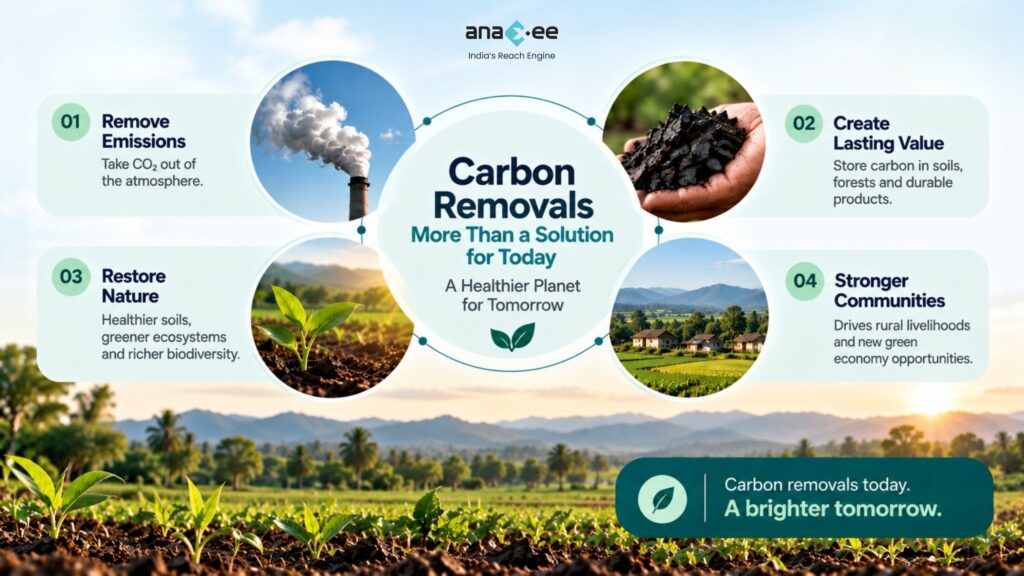
What are residual emissions, and why can’t you just eliminate them?
Residual emissions are the ones that remain after you’ve done everything technically and economically feasible to cut. They persist for reasons that don’t disappear with willpower:
- Hard-to-abate processes — cement chemistry, high-heat industry, aviation, certain agricultural emissions — have no clean substitute at scale yet.
- Long asset lifecycles — a plant or fleet bought today may still be running in 2045.
- Technology gaps — some solutions simply aren’t commercially viable at the scale you’d need.
Waiting for a perfect future technology creates a dangerous gap between your climate commitment and real-world impact. Removals exist to close that gap credibly, in the present, while the longer-term transformation catches up.
Has the “reduce first, offset later” model changed in 2026?
Significantly — and this is the update every sustainability lead needs on their radar. On 11 June 2026, SBTi published the final Corporate Net-Zero Standard V2.0, and it reframes how removals fit a net-zero pathway.
The headline shifts:
- Removals now enter the pathway before net-zero. Under V2.0, covered companies must compensate a rising share of ongoing emissions — starting at 1% in 2035 and climbing to 100% at the net-zero year (2050 at the latest).
- A durable-removals ramp kicks in early. At least 10% of that covered CO₂ must come from long-lived, durable removals by 2035, rising to 100% by net-zero — so the era of buying only the cheapest short-term credits is ending.
- Credits still don’t count as reductions. They’re reported separately and used to neutralise residuals or fund mitigation beyond your value chain — reinforcing, not replacing, real cuts.
- Shared responsibility for Scope 3. New pathways let value-chain partners collaborate on removals, with safeguards against double counting.
The standard becomes effective in early 2027, with V1 usable only through the end of 2027. Translation: the removals side of your strategy has a clock on it now.
Don’t carbon credits just let companies off the hook?
The evidence says the opposite. Companies active in the voluntary carbon market have been found to be markedly more likely to hold approved science-based targets and to invest more in cutting their own value-chain emissions — one widely-cited analysis put it at roughly 3.4× and 3× respectively. Engagement with carbon markets tends to sharpen internal accountability, not dilute it.
Why? Because a credible carbon strategy forces the same disciplines good decarbonisation needs anyway: clear emissions baselines, robust data systems, and governance that survives an audit. Companies that build those muscles for their credit portfolio end up managing their own footprint better too. Done with discipline, buying removals and cutting emissions pull in the same direction.
Why does credit quality decide whether any of this works?
Because a weak credit is worse than no credit. The market has split into a lower-quality, price-driven tier and a higher-integrity tier, and the gap between them is now a risk-management issue, not an idealistic one. Poor-quality credits expose you to reputational damage, regulatory scrutiny and internal credibility loss the moment they’re questioned.
High-integrity credits share the same traits every time: demonstrable additionality, conservative accounting and frequent verification, strong community safeguards, transparent long-term monitoring, and a clear approach to permanence. The smart move — which leading buyers are already making — is to retire fewer tonnes at higher quality rather than maximise cheap volume. Under SBTi V2.0’s durability ramp, that flight to quality stops being optional.
What role do nature-based solutions play now?
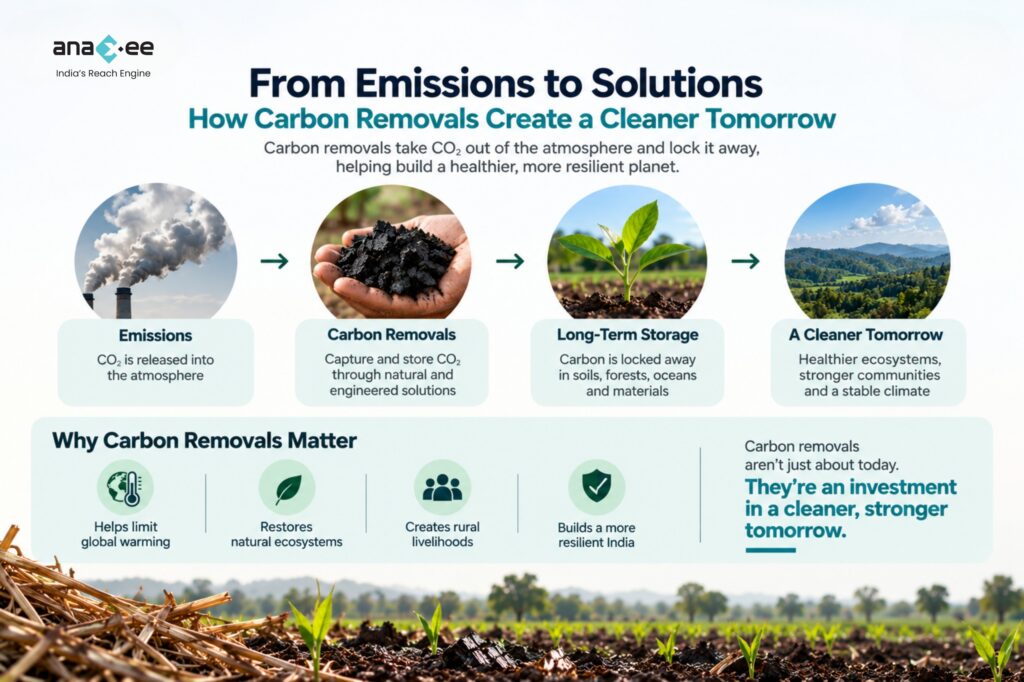
A larger one than the “durable removals only” headlines suggest. SBTi V2.0 takes a like-for-like, gradual-transition approach — matching residual emissions with removals of comparable durability over time, and explicitly recognising the role of nature-based solutions in delivering near-term mitigation and co-benefits while durable-removal technologies scale.
That matters because nature-based solutions — agroforestry, improved land management, forest and soil restoration — aren’t only carbon tools. They’re risk-mitigation assets: forests regulate water, soils underpin agricultural supply chains, wetlands buffer floods. For most companies, those physical risks are more immediate than any abstract temperature target. But NbS only delivers durable value when it’s implemented and monitored properly — which is where most projects, and most buyers, get burned.
How should a company build the removals side of its net-zero strategy?
Treat it as a portfolio, not a year-end purchase. Start building demand now (early buyers shape supply and lock in quality before prices climb). Diversify across geographies, project types and delivery years. Shift gradually toward higher-durability removals in line with the SBTi ramp. And insist on verifiable, audit-grade data for every tonne — because under tightening standards, an unprovable credit is a liability waiting to surface.
The hardest part isn’t deciding to do this. It’s sourcing high-integrity removals with data you can actually defend to an auditor, an investor, and a regulator.
If the removals-and-data side of your net-zero plan is the piece you haven’t nailed down, that’s worth a conversation now rather than at your next reporting cycle. Book a demo with Anaxee’s climate team →
Where Anaxee fits
Anaxee is the climate infrastructure that makes high-integrity Indian removals trustworthy. It runs India’s largest last-mile field network — 40,000+ Digital Runners across 540+ districts, 26 states and 11,000+ pincodes — paired with digital MRV through its Climate Command Centre. For a net-zero buyer, that translates into three things:
- Access to high-integrity nature-based removals — agroforestry, regenerative agriculture, improved cookstoves and more — with the community safeguards and co-benefits that hold up under scrutiny.
- Digital MRV built for audit. Geo-tagged field data and transparent audit trails that back the additionality, permanence and traceability of every credit — the ground truth SBTi-aligned disclosure now demands.
- Continuity over a project’s life. Long-term, on-ground engagement — not credits issued once and forgotten — which is exactly what separates durable-value NbS from the projects that fail buyers.
Anaxee isn’t a standard-setter or a verifier. It’s the execution-and-data layer that lets corporates, investors and verifiers trust the integrity of what they’re buying — bridging Indian communities and global carbon markets.
If you want removals you can defend to your board, your auditor and your investors, talk to the team that runs the ground operations at national scale. Book a demo → sales@anaxee.com
Your net-zero readiness checklist
- Map your residual emissions — which sources genuinely can’t be cut in this decade, and how big is the gap?
- Model the SBTi V2.0 removals ramp against your own footprint and net-zero year — the 2035 obligation arrives faster than it looks.
- Start a removals portfolio now, diversified and quality-first, rather than scrambling later.
- Demand audit-grade MRV on every credit — unprovable tonnes are tomorrow’s liability.
- Integrate credits into climate governance, not a sustainability side-project.
Net zero was never going to be reached by reductions alone — the physics and the economics don’t allow it. What’s changed in 2026 is that the rules now say so out loud, with a clock attached. The companies treating removals as a disciplined, quality-first part of their strategy today will meet those rules comfortably. The ones still treating carbon as a year-end afterthought will be repricing their credibility later.
Frequently asked questions
Why aren’t internal emission reductions enough to reach net zero? Because even aggressive decarbonisation leaves residual emissions in hard-to-abate sectors that can’t be cut quickly or affordably. Reaching net zero requires neutralising those remaining emissions with high-integrity carbon removals.
What are residual emissions? The emissions that remain after a company has cut everything technically and economically feasible — typically from heavy industry, aviation, agriculture and long-lived assets. They must be neutralised with removals at net zero.
Does the SBTi allow carbon credits for net zero? Yes, for neutralising residual emissions and funding mitigation beyond the value chain — not as a substitute for reductions. SBTi V2.0 (June 2026) also introduces a phased removals requirement starting in 2035.
Do carbon credits reduce a company’s incentive to cut its own emissions? Evidence suggests the opposite — companies active in the carbon market are more likely to hold science-based targets and invest more in their own value-chain reductions, because credible credit use demands the same data and governance discipline.
What makes a high-integrity carbon credit? Demonstrable additionality, conservative accounting, frequent verification, strong community safeguards, transparent monitoring, and a clear approach to permanence and reversal risk.
What role do nature-based solutions play in a net-zero strategy? They deliver near-term mitigation, valuable co-benefits and business-resilience value (water, soil, flood buffering), and are recognised under SBTi V2.0’s gradual-transition approach — provided they’re properly implemented and monitored.