
If you’ve worked in sustainability or ESG discussions, you’ve seen this happen:
Someone says:
“We’ve done our carbon accounting.”
And everyone nods as if the sustainability box is checked.
But here’s the uncomfortable truth:
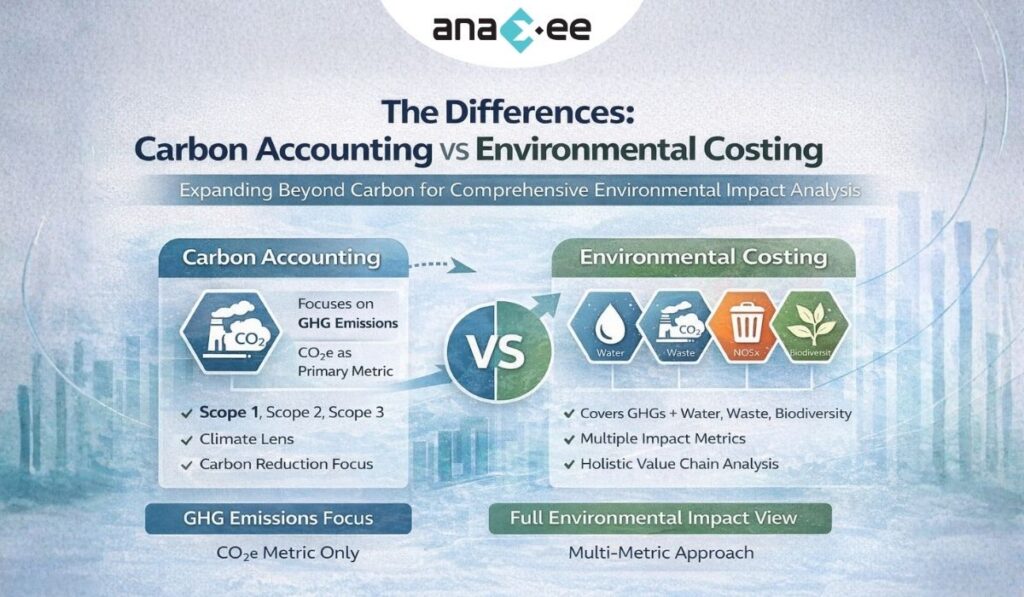
Carbon accounting ≠ Environmental costing
Not even close.
Carbon Accounting: A Narrow Lens
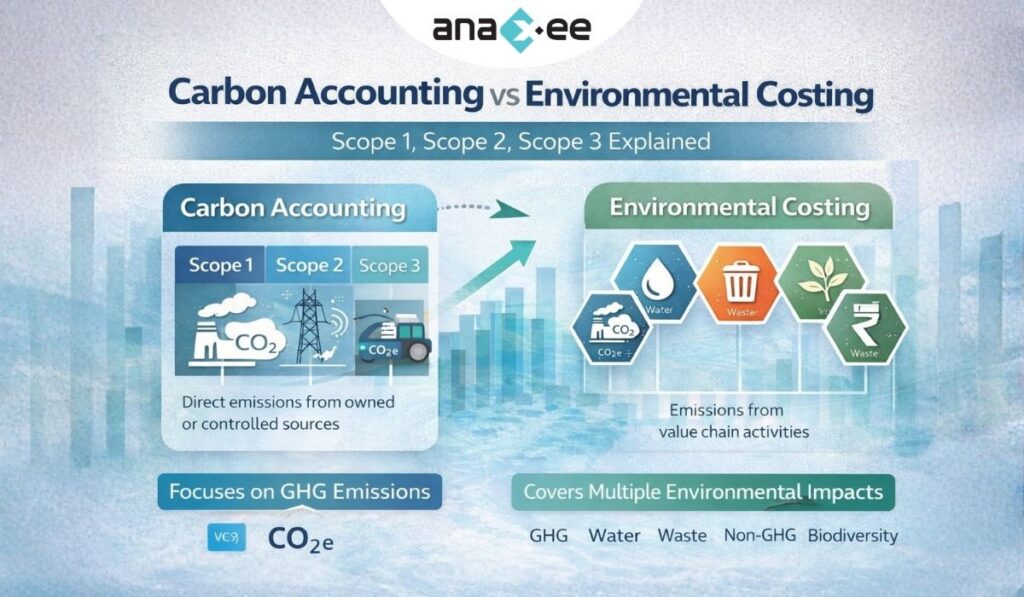
Carbon accounting measures greenhouse gas (GHG) emissions.
Typically using the GHG Protocol classification:
- Scope 1 → Direct emissions
- Scope 2 → Purchased energy
- Scope 3 → Value chain emissions R_GuidanceEnvironmentalCosting
It converts gases into tCO₂e using emission factors.
Useful? Absolutely.
Complete? No.
Environmental Costing: A Wider Frame
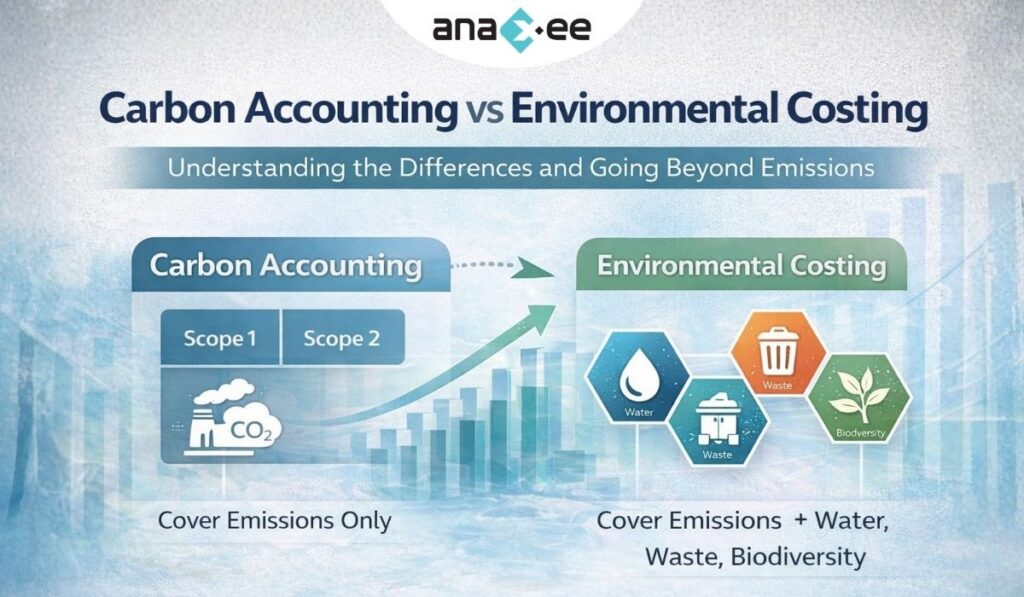
Environmental costing expands the view beyond GHGs:
✔ GHG emissions
✔ Non-GHG emissions (NOx, SOx, PM)
✔ Water usage
✔ Waste generation
✔ Biodiversity impact R_GuidanceEnvironmentalCosting
It captures the total ecological footprint.
Why Carbon Alone is Misleading
Imagine two factories:
Factory A
Low CO₂ emissions
Extremely high groundwater extraction
Factory B
Moderate emissions
Strong water recycling
Carbon metrics favour Factory A.
Reality may not.
Water stress risks, regulatory liabilities, and local ecosystem damage tell a different story.
Non-GHG Emissions: The Forgotten Category
Many pollutants don’t convert into CO₂ equivalents:
- NOx
- SOx
- Particulate Matter
- VOCs
Yet they drive:
- Health risks
- Compliance penalties
- Community conflicts
Ignoring them is dangerous.
Waste: The Silent Cost Centre
Waste isn’t just disposal cost.
It signals:
❌ Material inefficiency
❌ Process losses
❌ Circularity failure
Environmental costing records:
- Plastic waste
- E-waste
- Hazardous waste
- Recycled vs landfill R_GuidanceEnvironmentalCosting
Biodiversity: The Long-Term Blind Spot
Carbon accounting rarely touches ecological disruption.
Environmental costing acknowledges:
- Habitat changes
- Species impact
- Land & soil effects
These are slow-burn risks — but massive when triggered.
So Do Businesses Need Both?
Yes.
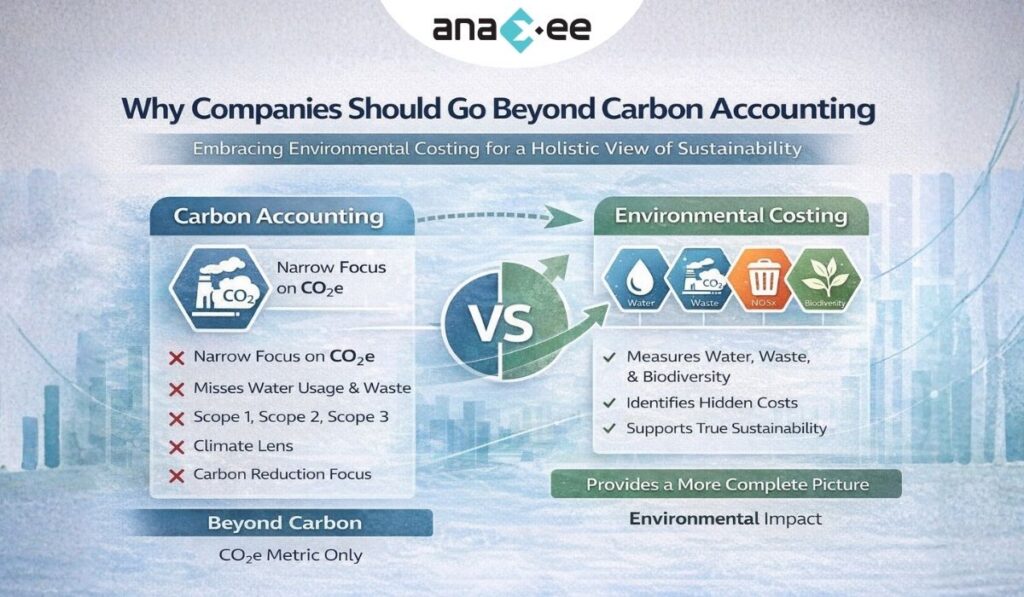
Carbon Accounting → Climate metric
Environmental Costing → Systems metric
Carbon answers:
“How much are we contributing to climate change?”
Environmental costing answers:
“How much are we impacting the planet overall?”
Strategic Insight
Companies obsessing only over carbon often:
- Miss water risks
- Underestimate waste inefficiencies
- Ignore air pollution exposure
- Misread sustainability ROI
Environmental costing connects these dots.
Bottom Line
Carbon accounting is essential.
But treating it as “complete sustainability measurement” is like judging financial health using revenue alone.
You need:
Revenue + Costs + Cashflow + Liabilities
Similarly:
Carbon + Water + Waste + Pollution + Ecology