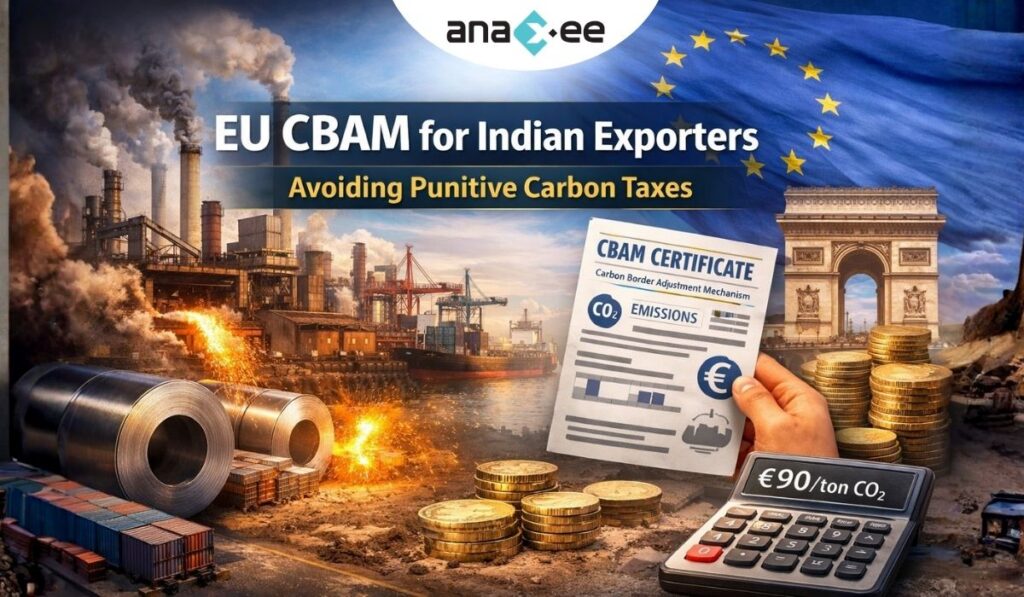

If you are an Indian manufacturer exporting to Europe, the rules of global trade just experienced a seismic shift. For years, the European Union has operated an internal Emissions Trading System (ETS) forcing domestic facilities to cut carbon emissions. But that created a loophole: companies were simply moving production to countries with more lenient climate laws—a phenomenon known as “carbon leakage”.
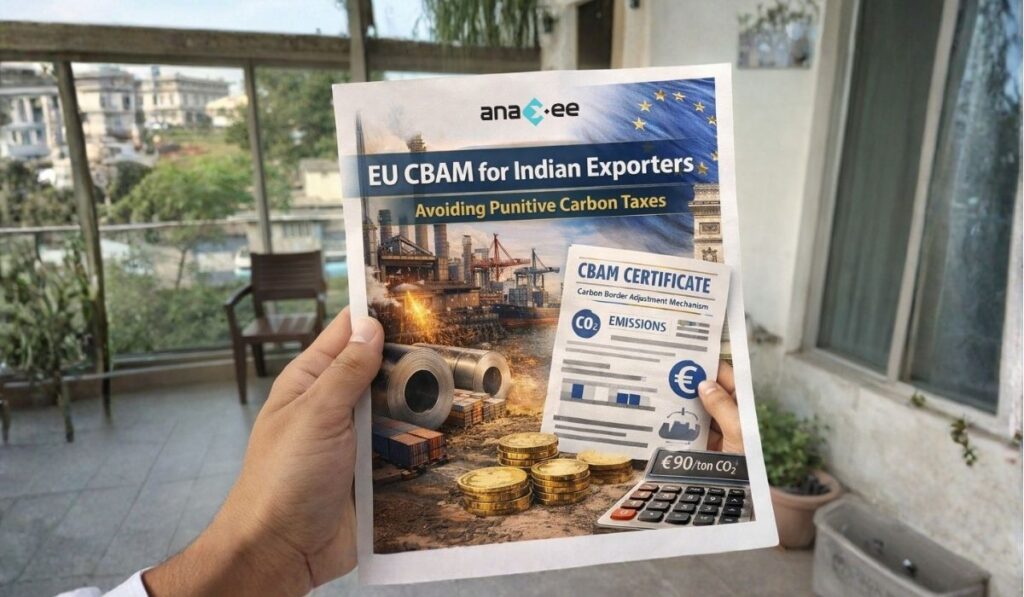
To level the playing field, the EU introduced the Carbon Border Adjustment Mechanism (CBAM). After a couple of years in a transitional “reporting-only” phase, the definitive period is finally kicking in. If you produce iron, steel, aluminum, cement, fertilizers, hydrogen, or electricity, you are directly in the crosshairs.
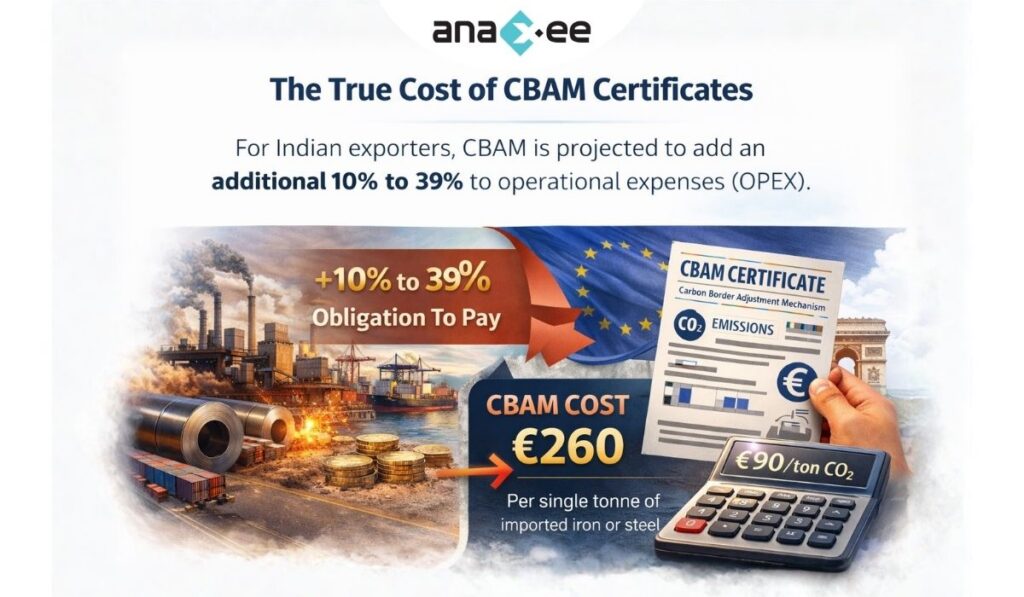
The True Cost of CBAM Certificates Let’s cut right to the financial impact. In the definitive period, EU importers must buy “CBAM certificates” to cover the carbon emissions embedded in the products they import. The cost of these certificates is tied to the EU ETS price, which recently touched highs of €80 to €90 per tonne of CO₂.
For Indian exporters—particularly those dealing in iron, steel, and aluminum—this isn’t just a minor administrative fee. Depending on your current emission intensity, CBAM could tack on an additional 10% to 39% to your operational expenses (OPEX). For example, a single tonne of imported iron or steel could carry an added CBAM cost of over €260.
The Trap of “Default Values” Here is where companies are going to lose a lot of money. To calculate the number of certificates your EU buyer needs, you must report the embedded emissions of your products. If you cannot provide accurate, verified data from your own facilities, the EU will force you to use their published “Default Values”.
Sounds easy, right? Just use the default number and move on.
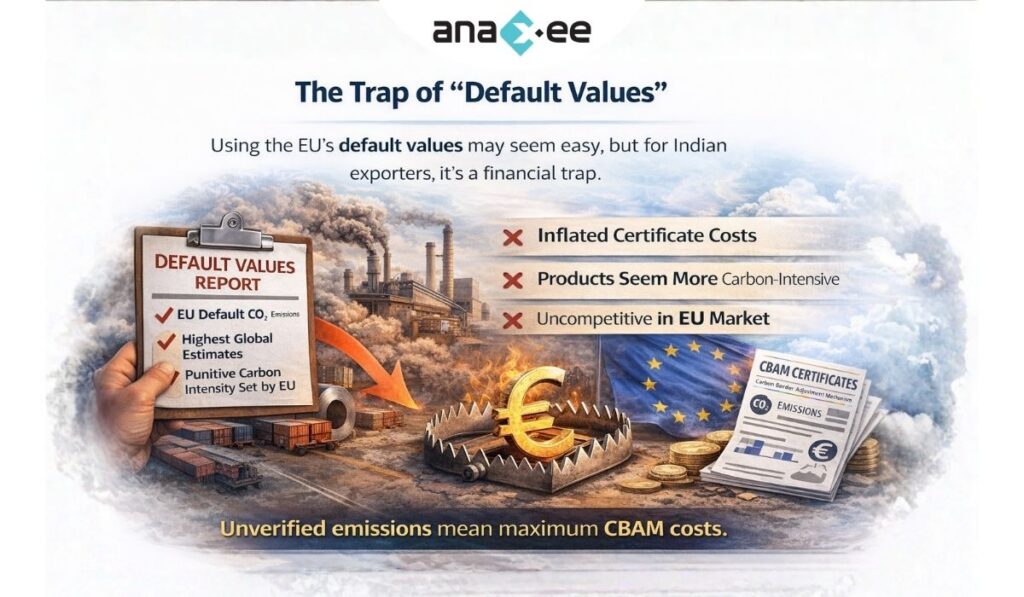
Don’t do it. The European Commission specifically designed these default values to be punitive. They represent some of the highest possible emission estimates globally. If you rely on default values, your products will automatically appear drastically more carbon-intensive than they actually are, triggering maximum CBAM certificate costs. This will instantly make your products uncompetitive in the European market.
Why Granular Tech-Led Data is Your Only Way Out The only way to avoid these inflated default values is to calculate and report your actual direct and indirect emissions. But this is easier said than done. You can no longer rely on rough spreadsheet estimates. You need exact data on stationary combustion, process emissions, and even the emissions of your supply chain precursors.
Just as Anaxee uses technology to bring last-mile transparency to rural climate projects, manufacturers now urgently need robust data infrastructure inside their factories. In 2026 and beyond, your competitive advantage won’t just be how cheaply you can manufacture a steel coil; it will be how accurately you can digitally track and prove its carbon footprint.
The definitive period is here. It’s time to stop guessing and start measuring—because every unverified tonne of carbon is about to cost you severely.
About Anaxee:
Anaxee drives large-scale, country-wide Climate and Carbon Credit projects across India. We specialize in Nature-Based Solutions (NbS) and community-driven initiatives, providing the technology and on-ground network needed to execute, monitor, and ensure transparency in projects like agroforestry, regenerative agriculture, improved cookstoves, solar devices, water filters and more. Our systems are designed to maintain integrity and verifiable impact in carbon methodologies.
Beyond climate, Anaxee is India’s Reach Engine- building the nation’s largest last-mile outreach network of 100,000 Digital Runners (shared, tech-enabled field force). We help corporates, agri-focused companies, and social organizations scale to rural and semi-urban India by executing projects in 26 states, 540+ districts, and 11,000+ pin codes, ensuring both scale and 100% transparency in last-mile operations. Connect with Anaxee at sales@anaxee.com