

Introduction
In the grip of the COVID-19 pandemic, reaching India’s rural communities with accurate information, digital access and vaccination support became a formidable challenge. That’s where Anaxee Digital Runners stepped in with Project Swaraksha – an ambitious campaign that combined technology, a distributed human network and deep local execution to address vaccine hesitancy in remoter districts. Drawing on coverage by outlets such as YourStory, Business Standard, ThePrint and others, this blog explores the initiative’s purpose, execution and impact — and what it signals for Anaxee’s broader capabilities.
The Challenge: Vaccine Hesitancy + Digital Divide in Rural India
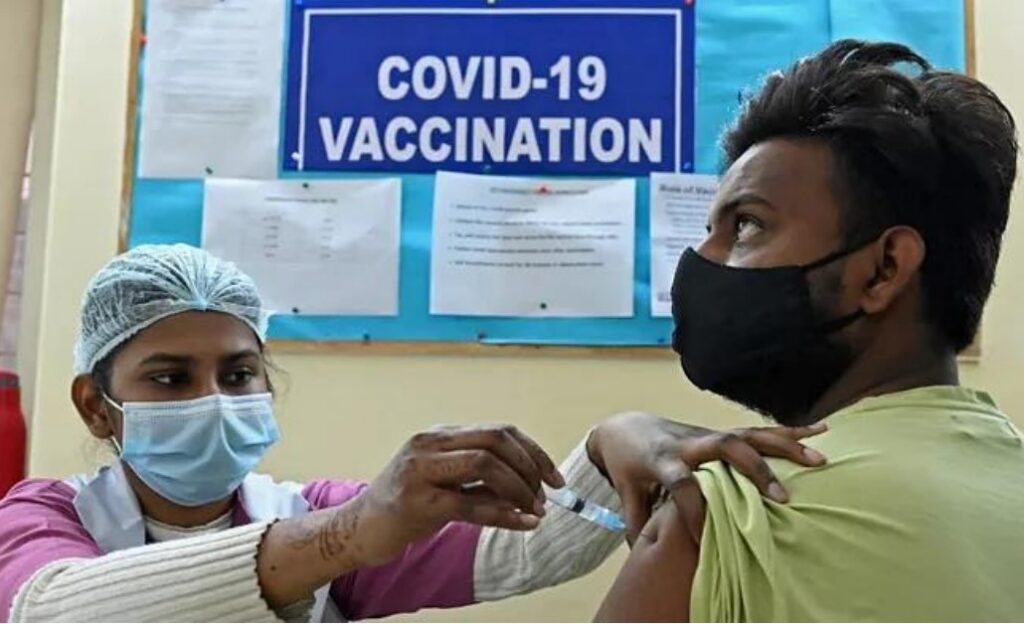
India’s rural hinterland faced a twin barrier early in the vaccination drive: first, misinformation, fear and cultural reluctance among remote communities (vaccine hesitancy); second, lack of access to digital portals (e.g., the CoWIN system) that urban India took for granted. According to YourStory, Anaxee’s Project Swaraksha “addressing vaccine hesitancy in remote areas … aims to get around 10 lakh people to volunteer to receive their first vaccine dose.” YourStory.com
Another article pointed out that the digital registration of vaccination was a “virtual barrier” for many villagers — when bookings moved online, access and trust broke down. Business Standard+1
Thus, the core problem became: how to combine on-ground human outreach (door to door) with digital assistance (registration, appointment, certificate) and build trust locally.
The Purpose of Project Swaraksha
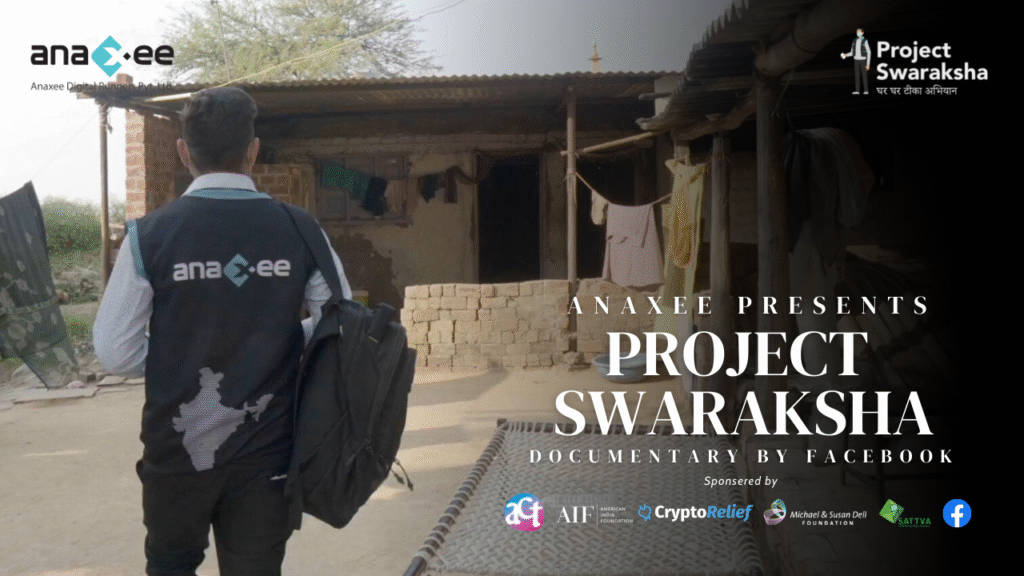
Project Swaraksha was conceived by Anaxee with five key objectives:
- Reach rural villages (particularly those under population thresholds, e.g., <10,000) where vaccine uptake was low. Anaxee Digital Runners+1
- Spread awareness of vaccine benefits, counter rumours and encourage uptake. Anaxee Digital Runners+1
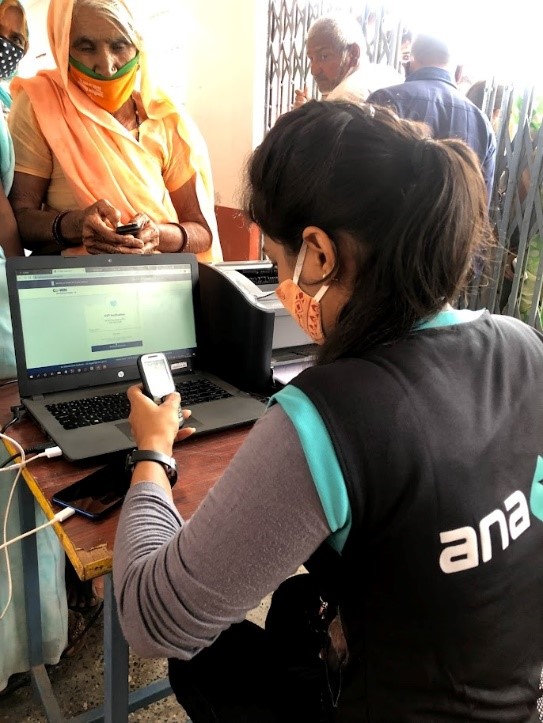
- Provide digital assistance: help people register on the CoWIN portal, book slots, get vaccinated, download certificates. YourStory.com+1
- Employ rural youth as “Digital Runners” – thus linking outreach with livelihood. (Generate 50,000 jobs) Business Standard
- Monitor transparently using Anaxee’s tech platform, track each step from counselling to vaccination and certificate. Anaxee Digital Runners+1
The funding commitment announced — US$1 million from United Way Bengaluru (UWBe) via Crypto Relief — provided the financial backing for this scale. ThePrint+1
Anaxee’s Model: Digital Runners + Tech + Last-Mile Execution
What distinguished Anaxee’s approach? Three components stand out:
Human Network – Digital Runners
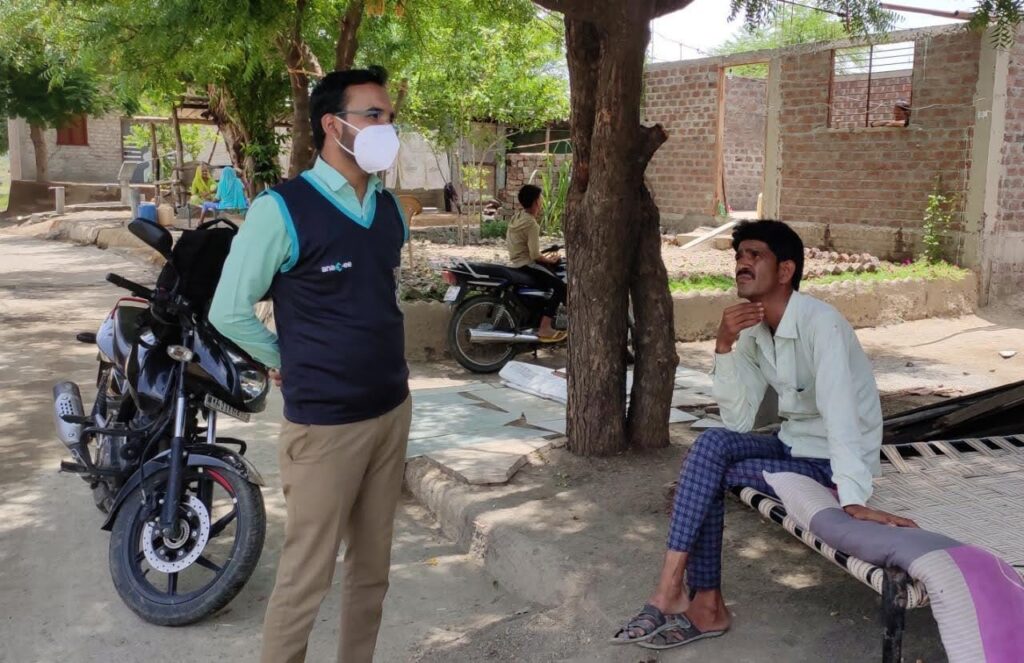
Anaxee’s core asset is its “digital runners” — tech-enabled local youth in rural/semi-urban settings, trained to do door-to-door outreach, assist with digital tasks, counsel and collect data. As YourStory explained: “With its network of 20,000+ on-field Digital Runners … a tech-based platform that helps businesses … scale in Tier II, III and IV towns.” YourStory.com+1
These runners were paid per successful vaccination (as per the Business Standard press-release) and were trained and monitored via the Anaxee app. Business Standard
Technology Platform
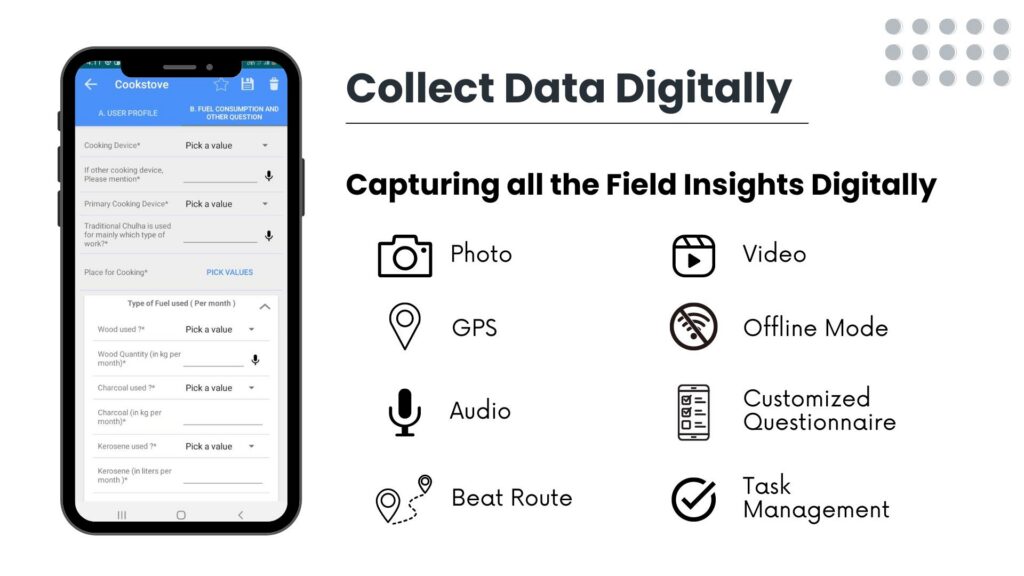
Anaxee built a mobile app/field-dashboard to track each step: runner onboarding, area assignments, counselling activity, registration assistance, vaccination outcome and certificate download. This digital layer enabled scalability and real-time monitoring. The Business Standard article noted “entire management … being carried out digitally using the Anaxee app.” Business Standard
Last-Mile Focus
Instead of focusing only on towns, Anaxee deliberately targeted small villages (population <10,000) across states like MP, Bihar, UP, and tribal districts. The objective was to reach the deep rural areas where mainstream vaccination drives had less traction. Anaxee Digital Runners
Combining these three — local human touch, digital monitoring, and focus on underserved geographies — created a model that bridged the digital divide and trust gap simultaneously.
Execution: Key Phases & Strategies
Phase 1 – Mobilisation & Counselling
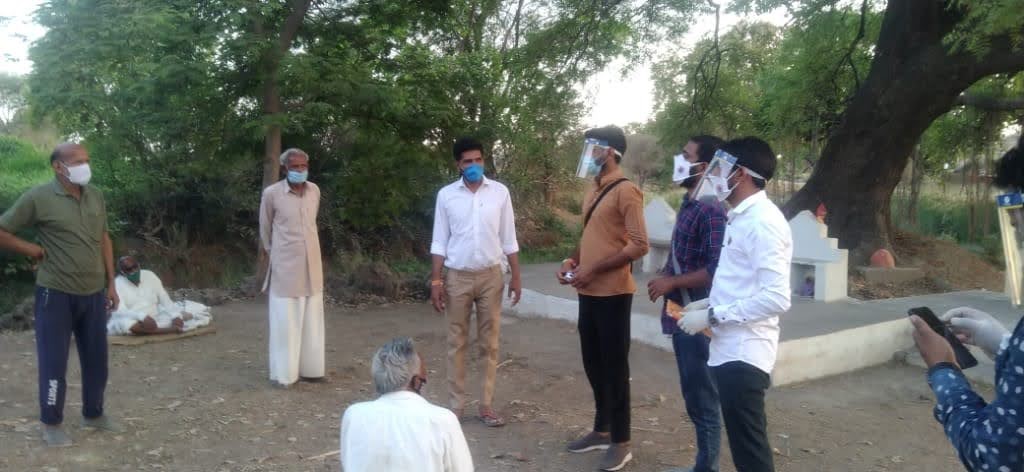
From around May 2021 onward (Project launch date cited as 22 May 2021 in one coverage). YourStory.com+1
Digital Runners were deployed to villages, conducted one-on-one counselling sessions, clarified doubts about vaccine safety/efficacy, helped schedule registration and appointment. For instance, one rural beneficiary was initially refusing vaccination saying “I only have a few days to live — please stop bothering me.” The runners counselled her and got her vaccinated. Project Swaraksha
Phase 2 – Digital Assistance & Registration
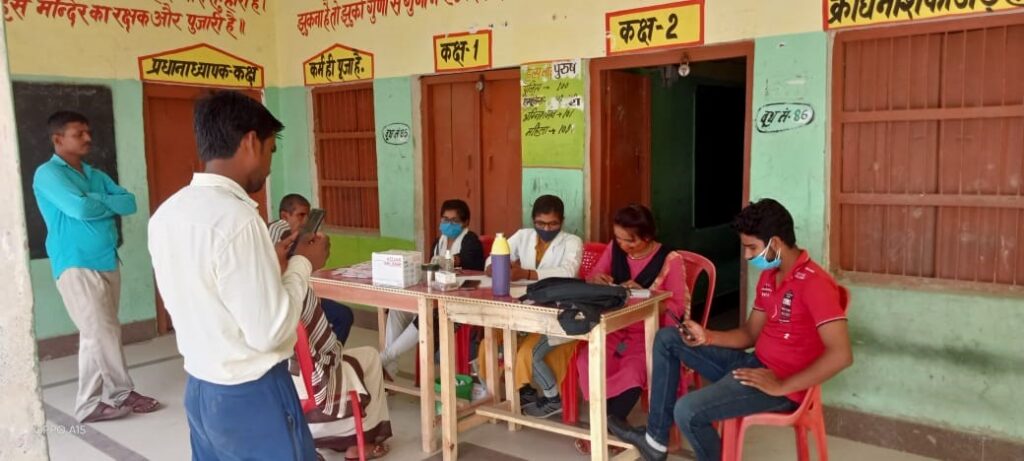
Runners assisted villagers in using the CoWIN portal, booking slots, and obtaining certificates. This reduced technical friction. YourStory reported that when vaccination opened for 18+ bracket, demand surged but misinformation and slot shortages created barriers — the runners stepped in. YourStory.com+1
Phase 3 – Scale & Monitoring
Anaxee aimed to deploy 50,000 runners across rural India and reach up to 1 crore rural citizens. The press release noted “employ 50,000 Digital Runners … aims to reach 1 Crore rural citizens.” ThePrint
Within about 40 days from launch, more than 85,000 villagers across 22 states, 185 districts and 1,250 tehsils had been reached via over 3,000 runners. Business Standard
Partnerships & Funding
Funding from UWBe and Crypto Relief gave the monetary backbone. Government district partnerships – e.g., an MOU with Mon District in Nagaland – expanded the geographical footprint. ThePrint
Impact: Outcomes & Learnings
Reach & Vaccination
Anaxee’s own site reports over 3 million rural citizens counselled, 2 million vaccinations confirmed in the documentary summary. Anaxee Digital Runners
From media reporting: initial targets of 10 lakh volunteer first-dose participants, outreach across 22+ states. YourStory.com
Employment Creation
By employing rural youth as Digital Runners and paying them per successful activity, the campaign created meaningful rural income pathways in the pandemic-hit economy. The sources mention generating 50,000 jobs for rural youth. ThePrint
Technology & Data Transparency
The model highlighted how digital tools plus field agents yield transparent monitoring. As Anaxee noted: “Our last-mile distributed network … technology-enabled … ensures fool-proof execution of the program in rural and semi-urban India.” Anaxee Digital Runners
Trust & Social Behaviour Change
Perhaps the key success was bridging trust gaps. A local runner acting as “daughter/son of the soil” could counsel community members, locally bridging reluctance rooted in myths. Business Standard wrote: “Runners being daughter/son of soil are able to connect to the people, solve their queries.” Business Standard
Learnings
- Deep rural geographies require local ambassadors, not just digital campaigns.
- Digital assistance is insufficient unless complemented by human counselling in local language/context.
- Monitoring via field-app platforms is vital for scale and accountability.
- Employment and livelihood linkage makes social initiatives more sustainable.
- Partnerships (NGO, district government, donor funding) accelerate reach.
What This Means for Anaxee’s Broader Social & Climate Agenda
Project Swaraksha is more than a vaccination drive — it illustrates Anaxee’s core capability of tech-enabled, human-anchored last-mile execution. The model of Digital Runners + mobile platform + distributed field network translates seamlessly into other domains: climate programmes (tree plantations, clean cooking), carbon projects (monitoring, MRV) and brand outreach in rural India.
For corporates, CSR/ESG teams, investors and partners, Swaraksha is a proof-point: Anaxee can deploy large-scale operations in remote geographies with transparency and data-driven outcomes. The rural employment dimension adds social benefit beyond pure outreach.
In the context of Anaxee’s Tech-for-Climate strategy, the same network of Digital Runners can be repurposed for carbon-credit methodologies, agroforestry census, data collection, community training and last-mile rollout. The vaccination campaign demonstrated that local youth equipped with smartphones and supervision can deliver impactful social outcomes — the climate challenge demands no less.
For example: executing a carbon sequestration project under a methodology like VM0047 may require hundreds of thousands of data-points, ground verification across many villages, and active community engagement. Anaxee’s infrastructure is already proven in such contexts.
Looking Ahead: Sustaining & Scaling Social Impact
While the numbers already achieved are significant, scaling and sustaining are the twin challenges. A few forward-looking considerations:
- Sustained engagement: Vaccination outreach is episodic; similarly, climate/social programmes need continuous follow-through to lock behavioural change.
- Quality and credibility: As programmes expand, maintaining data quality, runner training and app-monitoring standards matter.
- Technology upgrades: Offline-capable apps, multilingual interfaces, dashboard analytics will enhance field performance in non-connectivity areas.
- Integration with local systems: Sustainable change requires alignment with panchayats, health systems, local NGOs and local champions.
- Measuring long-term outcomes: For climate/social initiatives, outcome tracking (not just outputs) is increasingly demanded by funders and regulators — Anaxee’s monitoring platform can evolve accordingly.
- Replicability: The digital-runner model may be applied to other social domains (education, agriculture, financial inclusion) — Anaxee has that springboard.
- Revenue sustainability: Linking social programmes to impact funding, corporate partnerships or carbon/ESG market mechanisms can ensure financial sustainability.
Project Swaraksha stands as a landmark example of how technology, field-force and intent can converge to deliver social impact in India’s most challenging geographies. For Anaxee Digital Runners, it marks a confirmation of its core thesis: that last-mile reach in rural India is not a “nice to have” but a scalable operational capability.
As Anaxee continues to engage in climate projects, carbon-credit programmes, rural development and digital outreach, this model of Digital Runners offers a competitive advantage in a crowded ecosystem. Corporates, investors and social partners looking for genuine “tech-for-impact” should look at Anaxee’s demonstrated execution track-record.
If your organisation is seeking to pilot or scale a rural outreach, vaccination-type campaign, or community-anchored climate programme, don’t hesitate to connect with Anaxee to explore how the Digital Runner network can be mobilised for your challenge.
Let’s talk about your next social or climate initiative — because the last mile matters.