
Corporate climate ambition has never been higher.
Across sectors—tech, manufacturing, FMCG, energy, retail—companies are making bold announcements: Net-zero by 2030. Carbon neutral supply chains. Decarbonized operations. Science-based targets. Climate-aligned investments.
There’s genuine intent behind these commitments. Climate strategy is no longer a CSR line item tucked away in a sustainability report. It has become central to brand identity, investor confidence, regulatory preparedness, and global competitiveness.
But ambition alone doesn’t reduce emissions.
And this is where things get complicated.
To meet aggressive goals, corporates are relying heavily on the Voluntary Carbon Market (VCM)—a tool designed to fund real climate action across the world. In theory, the VCM is brilliant: companies pay for independently verified carbon reductions and removals, which both accelerates climate impact and unlocks value for communities.
In practice?
It’s messy, inconsistent, and often short on trust.
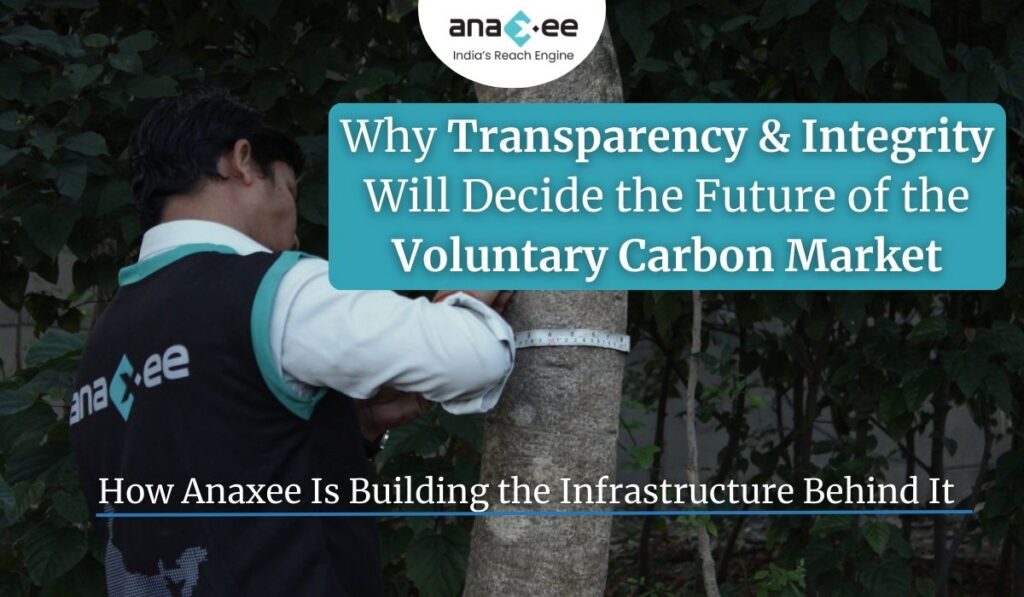
And that’s exactly why transparency and integrity are becoming the two most important currencies in the entire carbon ecosystem.
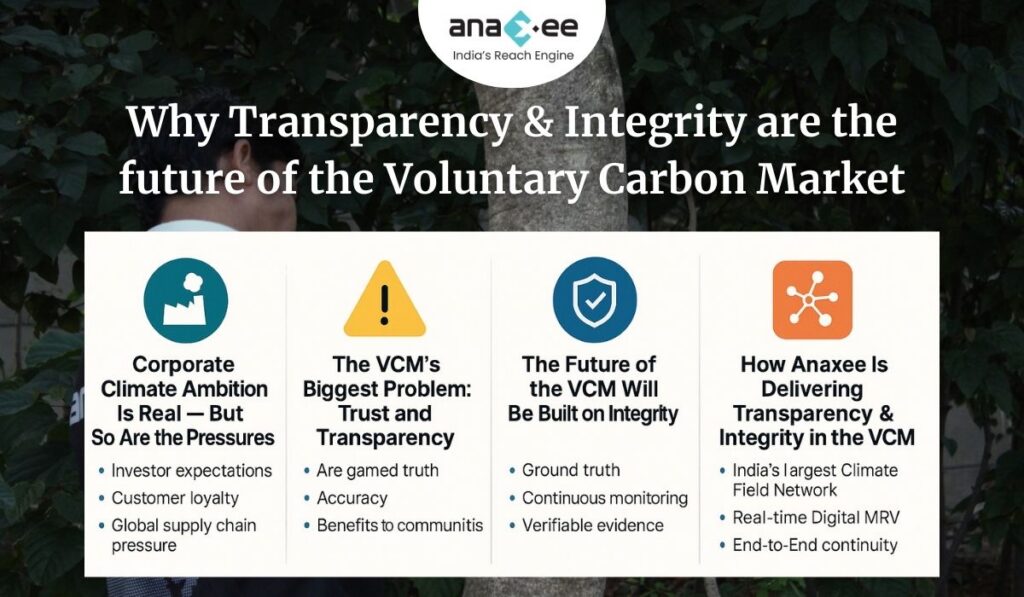
1. Corporate Climate Ambition Is Real — But So Are the Pressures
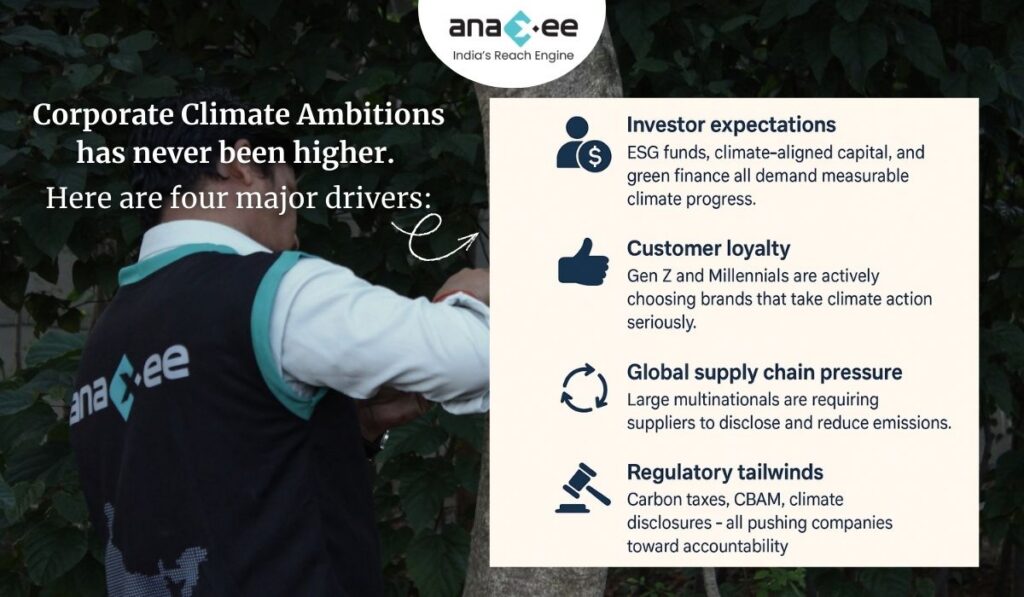
It’s easy to assume corporate climate action is driven only by branding. But spend even 10 minutes with any sustainability head or CXO, and you’ll hear the real drivers:
• Investor expectations
ESG funds, climate-aligned capital, and green finance all demand measurable climate progress.
• Customer loyalty
Gen Z and Millennials are actively choosing brands that take climate action seriously.
• Global supply chain pressure
Large multinationals are requiring suppliers to disclose and reduce emissions.
• Regulatory tailwinds
Carbon taxes, CBAM, climate disclosures—all pushing companies toward accountability.
So yes, corporate ambition is real. But so are the challenges.
Even the most climate-forward companies cannot decarbonize everything immediately.
Some emissions—logistics, agriculture, industrial processes—are hard to eliminate.
To bridge this gap, they turn to the Voluntary Carbon Market.
2. The VCM’s Biggest Problem: Trust and Transparency
The promise of the VCM is powerful:
Pay for verified climate action. Support communities. Offset unavoidable emissions.
But the reality?
The market is riddled with questions that keep sustainability teams awake at night.
a) Are the carbon credits real?
Was the project actually implemented the way it was claimed?
b) Is the data accurate?
Were the trees planted? Did the cookstoves reach households? Was the soil measured?
c) Is the credit truly additional?
Would the activity have happened even without carbon finance?
d) Is the monitoring consistent and long-term?
Or are we depending on a few baseline visits done years ago?
e) Are communities actually benefiting?
Or are projects merely passing through on paper?
The industry has seen enough controversies—overstated credits, unverifiable data, poor field execution—to make corporates extremely cautious.
And honestly?
They’re right to be cautious.
A carbon credit that cannot survive scrutiny is not a climate asset.
It’s a liability waiting to happen.
This is why transparency, traceability, and integrity will decide the future of the VCM.
3. The Future of the VCM Will Be Built on Integrity
Methodologies will evolve.
Registries will modernize.
AI will enhance monitoring.
But none of that matters if the field implementation is weak or the data trail is broken.
Every tonne of carbon must be anchored in three things:
• Ground truth
What actually happened in the field?
• Continuous monitoring
Not one visit a year. Real, repeated, structured data collection.
• Verifiable evidence
Geo-tagging, timestamps, photos, measurements, community records.
Corporates are no longer looking for the cheapest carbon credit.
They want the most defensible one.
Investors don’t want claims—they want proof.
Auditors don’t want stories—they want data.
And to produce this kind of trust at scale, the world needs something it currently lacks:
A climate infrastructure layer that connects ground operations with transparent digital MRV.
This is the gap that Anaxee is built to solve.
4. What the VCM Is Missing: True Climate Infrastructure
In India especially, climate projects are complex:
• Scattered villages
• Diverse soil conditions
• Small landholdings
• Limited digital adoption
• Logistical challenges
• Highly variable field conditions
You cannot run a high-quality carbon project with WhatsApp groups, CSV files, and occasional field visits.
You need a backbone: people + technology + operations working in sync.
That means:
- Field force trained to collect accurate climate data
- Digital workflows for every project activity
- dMRV systems that track progress in real time
- Soil, biomass, household, and intervention-level monitoring
- Tamper-proof geo-verified records
- Transparent reporting for verifiers and corporates
This is not a small undertaking.
It cannot be built by a carbon developer alone.
It requires a national-level infrastructure.
And that’s exactly what Anaxee has built over years of operating climate programs across India.
5. How Anaxee Is Delivering Transparency & Integrity in the VCM
Anaxee is not a carbon project developer.
We are the enablement layer behind large-scale climate action in India.
A) India’s Largest Climate Field Network
With thousands of trained Digital Runners, Anaxee reaches places where traditional MRV systems simply cannot go.
This network allows:
• Large-scale farmer onboarding
• Regular field visits
• Intervention tracking
• Household verification
• Soil sampling & mapping
• Asset audits
• Community engagement
And every activity is traceable.
B) Tech for Climate: Real-Time Digital MRV
Anaxee’s platform captures and updates data from the field in real time:
- Geo-tagged photos
- Timestamped verification
- Farmer details
- Soil and plot mapping
- Intervention logs
- Project timelines
- Monitoring schedules
- Audit-ready evidence
This brings unprecedented credibility to carbon projects—even the most complex ones like agroforestry, regenerative agriculture, ERW, clean cooking, and solar access.
C) End-to-End Continuity: From Field Data to Verified Credits
Most carbon projects fail not in design, but in maintenance.
Anaxee solves this by providing continuity over the entire project lifecycle:
- Baseline surveys
- Onboarding
- Implementation data
- Monitoring events
- Verifier-ready reporting
- Credit issuance support
This is the “missing middle” of carbon markets—
the part between project idea and verified credit.
D) Trust, Transparency, Traceability — At Scale
What corporates and investors get with Anaxee is not just data.
They get confidence.
Confidence that:
- Each carbon claim has evidence behind it
- Every photo, GPS point, and measurement is verifiable
- Monitoring is continuous
- Field operations are real, not theoretical
- Their climate investment translates to measurable outcomes
This is the integrity layer the VCM has been waiting for.
Conclusion: Ambition Needs Integrity. Integrity Needs Infrastructure.
Corporate climate ambition is rising.
The VCM is evolving.
Methodologies are improving.
But the future will belong to those who invest in trust.
The next decade of climate finance will not be shaped by clever pitches.
It will be shaped by rigorous ground truth, transparent data, and credible infrastructure.
And that is the role Anaxee is playing—
bringing together technology, field force, and monitoring systems
to create a climate infrastructure India can rely on.
The world doesn’t just need more credits.
It needs more trustworthy credits.
And trust is built on transparency—one data point at a time.
Anaxee — Tech for Climate.
India’s Climate Infrastructure.