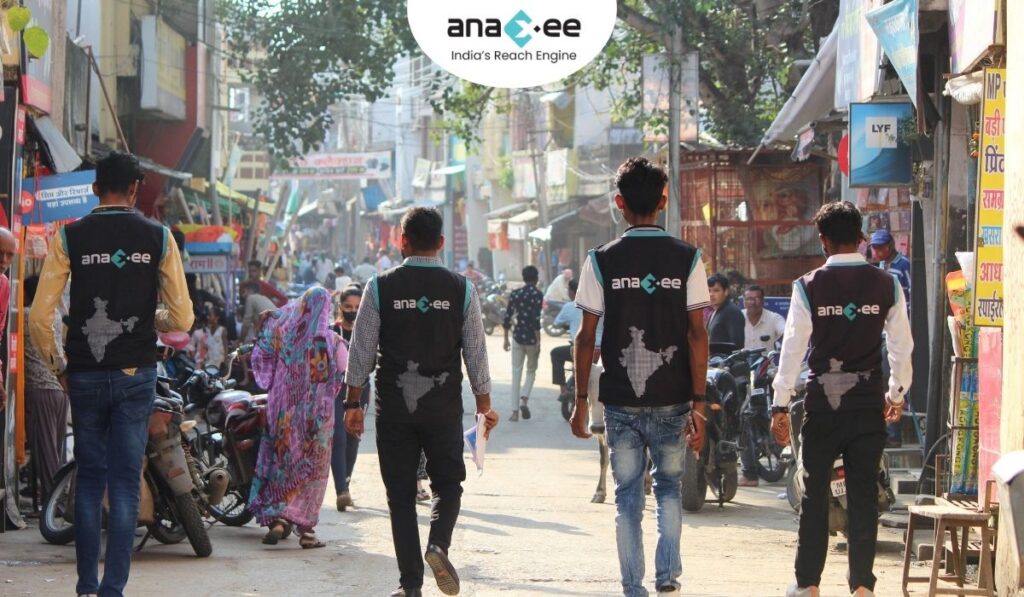
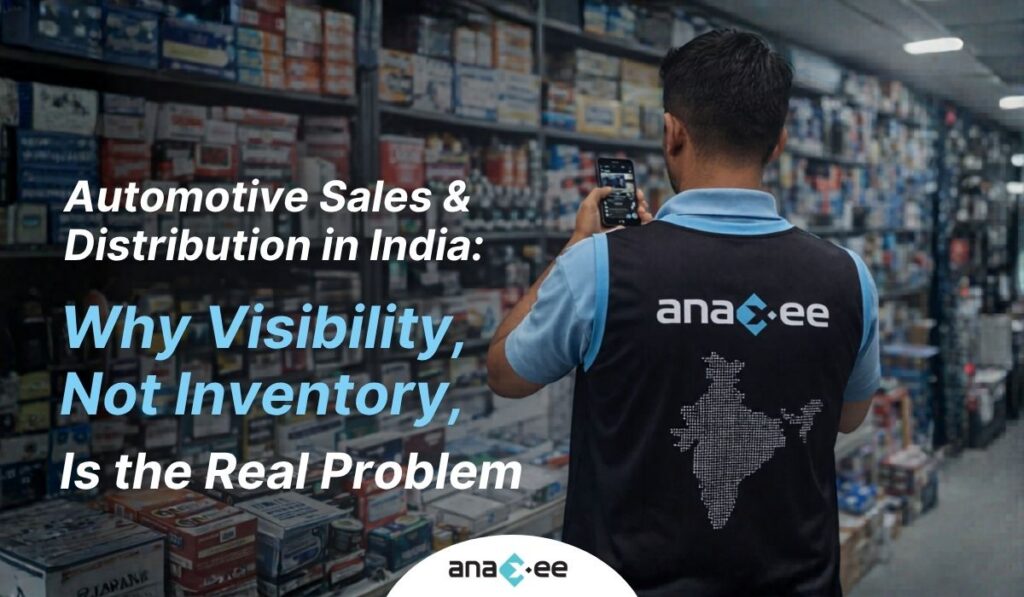

Walk into any tier-2 or tier-3 town in India and ask a simple question:
“Which brand of brake pads sells the most here?”
You won’t get a clean answer.
Not because demand doesn’t exist.
But because no one really knows what’s selling, where, and why.
That’s the real problem in India’s automotive aftermarket.
And it’s not a small problem.
The Indian automotive aftermarket is already valued in the range of $15–20 billion and growing steadily, driven by rising vehicle ownership and longer vehicle lifecycles . Add to that the broader auto component ecosystem—worth nearly $78+ billion annually—and you’re looking at a massive, fragmented opportunity .
Yet, despite this scale, most brands are still operating with partial visibility.
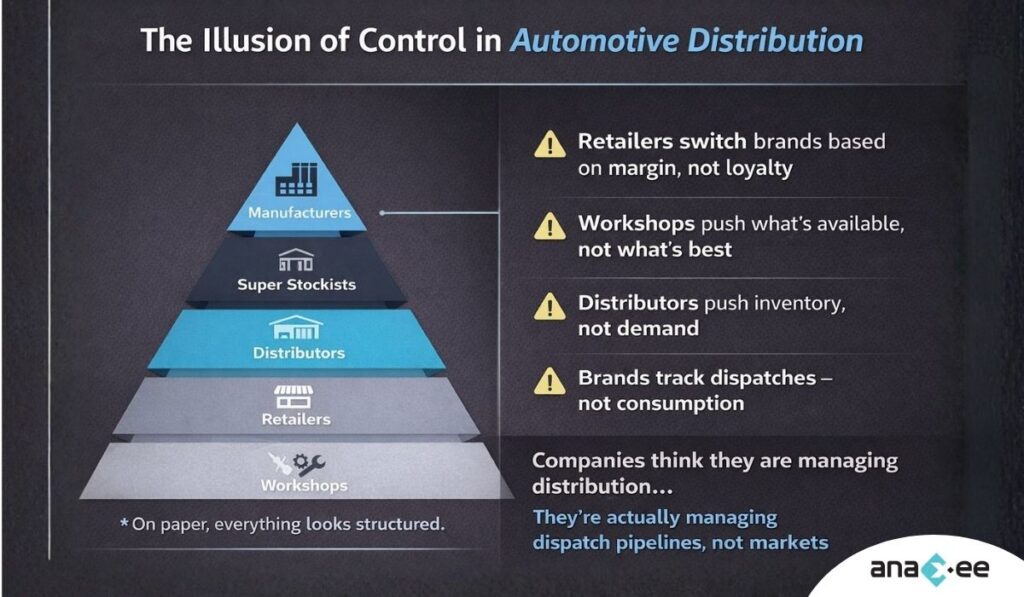
The Illusion of Control in Automotive Distribution
On paper, everything looks structured.
- Manufacturers
- Super stockists
- Distributors
- Retailers
- Workshops
A clean pyramid.
But on the ground, it’s messy.
- Retailers switch brands based on margin, not loyalty
- Workshops push what’s available, not what’s best
- Distributors push inventory, not demand
- Brands track dispatches—not consumption
So while companies think they are managing distribution…
They’re actually managing dispatch pipelines, not markets.
Why Visibility Breaks in the Real World
1. Fragmented Retail Universe
India’s aftermarket is deeply unorganized and hyperlocal.
Independent workshops alone account for over 50% of the market, often operating without structured systems or data visibility .
This means:
- No real-time sales tracking
- No SKU-level intelligence
- No standard reporting
Your product could be selling—or not selling—and you wouldn’t know.
2. Counterfeit & Substitute Products Distort Reality
A major issue often ignored in boardroom conversations:
- Counterfeit parts
- Low-quality substitutes
- Lookalike packaging
These distort actual demand signals.
Even if your brand has strong pull, the retailer might still push a higher-margin alternative.
This is a known structural challenge in the aftermarket ecosystem .
3. Data Ends at the Distributor Level
Most automotive companies rely on:
- Secondary sales data
- Distributor billing
- ERP dashboards
But here’s the gap:
👉 Retail is invisible
You don’t know:
- Which SKU is moving at which shop
- Which competitor is replacing you
- Which geography is underpenetrated
So decisions are made on assumptions, not ground truth.
4. Field Teams Are Thin and Overstretched
Even when brands invest in sales teams:
- Coverage is limited
- Visits are inconsistent
- Reporting is manual or delayed
One sales officer may handle:
- 3–5 districts
- Hundreds of retailers
That’s not coverage. That’s approximation.
The Big Shift: From Distribution to Demand Intelligence
The automotive aftermarket is evolving.
Three major shifts are happening:
1. E-commerce is reshaping buying behavior
Online platforms are making parts more accessible and transparent .
2. Vehicles are becoming more complex
With EVs and electronics, product complexity is increasing .
3. Market growth is accelerating
Aftermarket demand is projected to grow at 6–8% CAGR in the coming years .
But here’s the contradiction:
👉 Growth is happening faster than visibility is improving.
What Most Solutions Get Wrong
Many companies have already adopted:
- Sales tracking apps
- Distributor management systems
- CRM tools
These help—but only partially.
Because they assume:
“If data is captured, the problem is solved.”
It’s not.
Because:
- Data is often self-reported
- Coverage is incomplete
- Retail reality is missing
In short:
👉 Software without execution creates blind spots at scale
What Actually Works: Execution-Led Visibility
To truly understand automotive markets in India, three things must happen together:
1. Physical Reach
Someone has to actually visit the market:
- Retailers
- Workshops
- Mechanics
Not occasionally. Consistently.
2. Structured Data Capture
Every visit should capture:
- SKU-level availability
- Pricing
- Competitor presence
- Retailer preference
Not just “visited / not visited.”
3. Central Intelligence Layer
This data should translate into:
- Live dashboards
- Territory insights
- Demand gaps
- Distributor performance
Only then can brands move from:
👉 Guesswork → Decision-making
Where Anaxee Changes the Equation
This is where most approaches stop.
And where Anaxee starts.
Instead of treating the problem as a software issue, Anaxee treats it as a market execution problem.
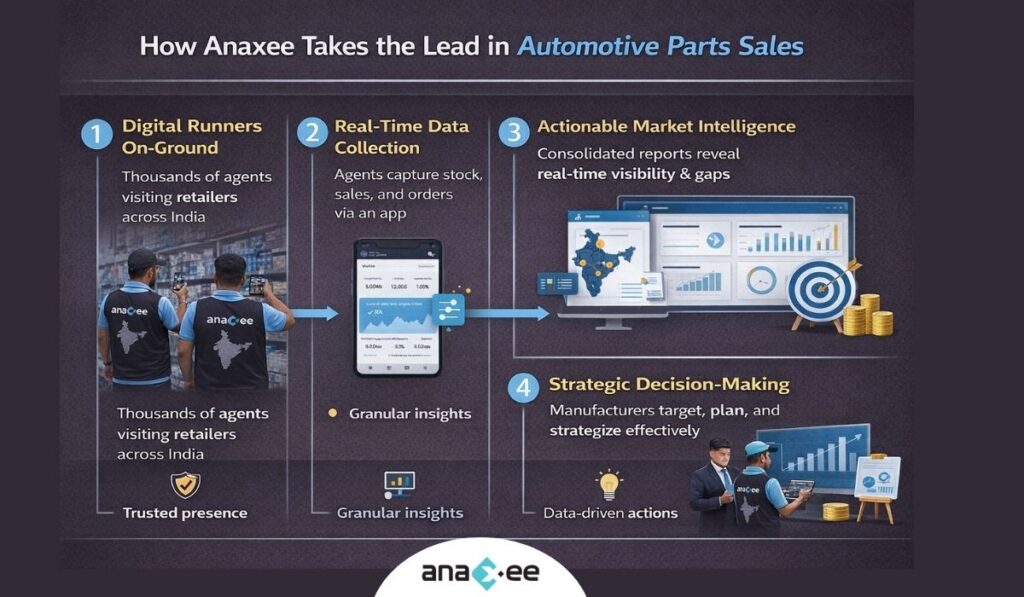
1. Tech + Feet on Street
Not just dashboards.
- A distributed network of trained digital runners
- Hyperlocal coverage across districts and talukas
- Real-world data capture from actual retailers
This ensures:
👉 Data is not assumed. It is observed.
2. Retail-Level Intelligence (Not Just Distributor Data)
Instead of relying on secondary sales:
- Track actual retail movement
- Understand product substitution
- Identify white spaces
This gives brands something rare:
👉 True demand visibility
3. Scalable Last-Mile Execution
Most companies struggle to scale field operations.
Anaxee flips that:
- On-demand field force
- Standardized workflows
- Real-time reporting
So instead of hiring and managing large teams internally:
👉 You plug into an existing execution engine.
4. Actionable Insights, Not Raw Data
Data alone is noise.
What matters is:
- Which SKU is losing share
- Which region needs activation
- Which distributor is underperforming
Anaxee translates ground data into:
👉 Decisions you can act on immediately.
The Real Competitive Advantage Going Forward
In the next 5 years, the winners in automotive distribution won’t be the ones who:
- Have the most inventory
- Or the biggest dealer network
They’ll be the ones who:
👉 Understand their market the fastest and most accurately
Because when you know:
- What is selling
- Where it is selling
- Why it is selling
You can:
- Optimize supply
- Improve retailer relationships
- Increase market share
Without blindly pushing inventory.
Final Thought
India’s automotive aftermarket is not broken.
It’s just invisible at the last mile.
And until that visibility gap is solved:
- Sales teams will keep guessing
- Marketing will keep overspending
- Distribution will keep leaking value
The shift is already happening.
From:
👉 Distribution-led growth
to
👉 Intelligence-led growth
The only question is:
Will your brand see the market clearly—or keep operating in fragments?
Connect with Anaxee today at sales@anaxee.com