
In 2021, when India opened COVID vaccination to every adult, the cities moved fast. Rural India did not. The problem was rarely the vaccine itself — it was hesitancy, misinformation, and the practical maze of CoWIN registration in places with patchy networks and low smartphone penetration.
Thank you for reading this post, don't forget to subscribe!Project Swaraksha — घर-घर टीका अभियान, a door-to-door vaccination campaign — was Anaxee’s answer. Here is how it worked, and what it delivered.
The model: a trusted local face at every doorstep
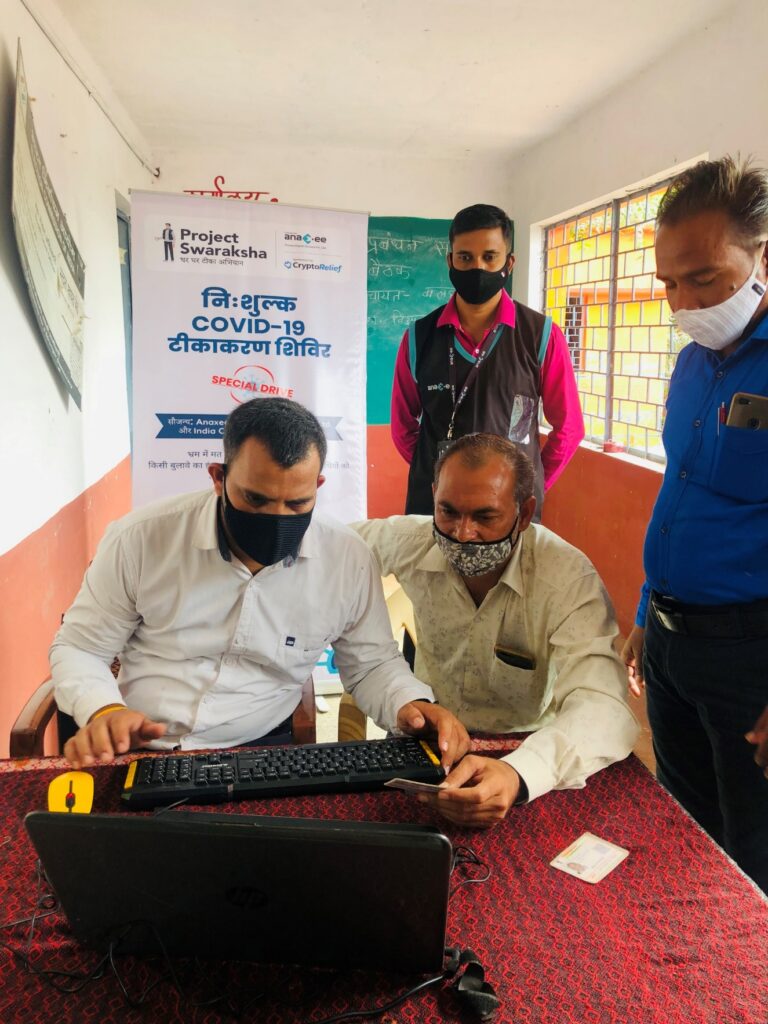
Anaxee deployed trained local Digital Runners to go house to house. Each runner was from the community they served — a familiar face who could counsel a hesitant family one-on-one, in their own language, and actually be believed. They answered questions, cleared misinformation, and then did the practical work: registering each family member on CoWIN, booking slots, helping locate camps, and making sure people returned for the second dose and collected their certificates.
Low smartphone penetration and poor connectivity meant OTP-based registration often failed at the camp. Runners solved this by generating beneficiary IDs in advance — removing a bottleneck that quietly blocks rural vaccination almost everywhere.
Technology and accountability, built in
Every runner trained online and had to pass a test before starting. Every visit was logged on the Anaxee app — and runners were paid per verified vaccination, not per hour. The entire programme rolled up into a live dashboard, giving funders and partners auditable, real-time visibility down to the village.
Working with government
Several district administrations came on board. In the north-east, Anaxee signed an MOU with the Government of Nagaland for the Mon district — one of several government partnerships that made on-ground execution smoother.
What it delivered
- Counselled 29.8 lakh rural citizens (29,81,817)
- Facilitated 17.4 lakh vaccinations (17,42,219)
- Deployed 12,000 Digital Runners
- Reached 19 states, 227 districts, 13,067 villages and 10,700 pincodes
The programme was funded by Crypto Relief, GiveIndia, the American India Foundation and NTT Data CSR. Its scale and model drew national attention — Meta (Facebook) produced a documentary on how it was done.
The real takeaway
Project Swaraksha was not a one-off. It was the Anaxee field machine — local runners, app-tracked, paid on results — pointed at one urgent mission. The same engine can run any large rural programme: a health drive, a scheme rollout, a survey, or a CSR activation.
Planning a programme that has to reach the last village?
See the full Project Swaraksha page — the numbers, the live dashboard and the documentary — and tell us what you need to run.