
Designing a social programme is the easy part. Running it across thousands of villages, in dozens of languages, over months — and being able to prove it happened — is where most initiatives come apart. The gap is almost always the last mile.
Thank you for reading this post, don't forget to subscribe!Across programmes that have reached millions of rural citizens, a repeatable playbook emerges. Here is how Anaxee executes social programmes at national scale.
Step 1: Put real local people on the ground
National scale is not a call-centre with a map on the wall. It is thousands of trained local field workers — Digital Runners who live in the communities you are trying to reach. They speak the dialect, know the panchayat, and are trusted in a way an outsider never will be. This is the foundation; everything else sits on top of it.
Step 2: Turn the mission into a field-ready workflow
Whatever the programme — vaccination, enrollment, a survey, an awareness drive — it has to become a sequence of small, trackable tasks a runner can complete at a doorstep. Awareness first, then one-on-one counselling to handle real questions and hesitation, then the action itself (register, enroll, vaccinate, collect), then documentation, then follow-up. Skip a step and the funnel leaks.
Step 3: Run the whole thing on an app
At scale, coordination cannot live in phone calls and spreadsheets. Onboarding, training and assessment, task allocation and data capture all run through a single app. A runner sees exactly what to do; the programme sees exactly what was done. That is the difference between managing 300 people and managing 30,000.
Step 4: Make every step visible and auditable
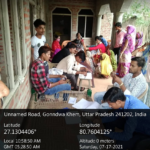
Each visit is logged with a photo, a geo-tag and a timestamp, and rolls up into a live dashboard — filterable by state, district and village. You should never have to wonder whether the work is happening; you should be able to watch it in near real time, and catch problems while there is still time to fix them.
Step 5: Pay for outcomes, not activity
Incentives decide behaviour. When runners are paid per verified outcome — a confirmed vaccination, a completed registration, a validated response — the field force optimises for the result you actually care about. Your budget buys delivery, not busyness.
Step 6: Bring government along
Large rural programmes almost always intersect with a district administration. MOUs, compliance and coordination with local authorities turn potential friction into active support — camps get organised, access gets easier, and credibility rises.
None of these steps is exotic on its own. The hard part is running all six together, across the country, reliably. That is a capability, not a single campaign.
This playbook, proven at national scale
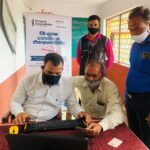
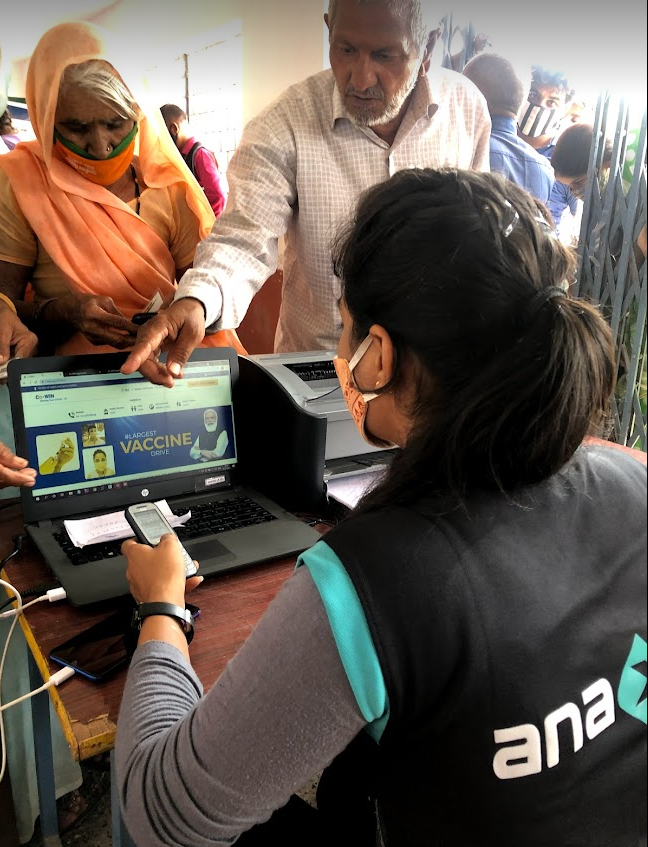
It is exactly how Project Swaraksha reached 29.8 lakh rural citizens across 19 states and 227 districts — door to door, measured end to end. See the full programme.
If you are planning a programme that has to work in the places that are hardest to reach, see how Anaxee executes at national scale — or explore Prabhavak, our hyperlocal amplification network.